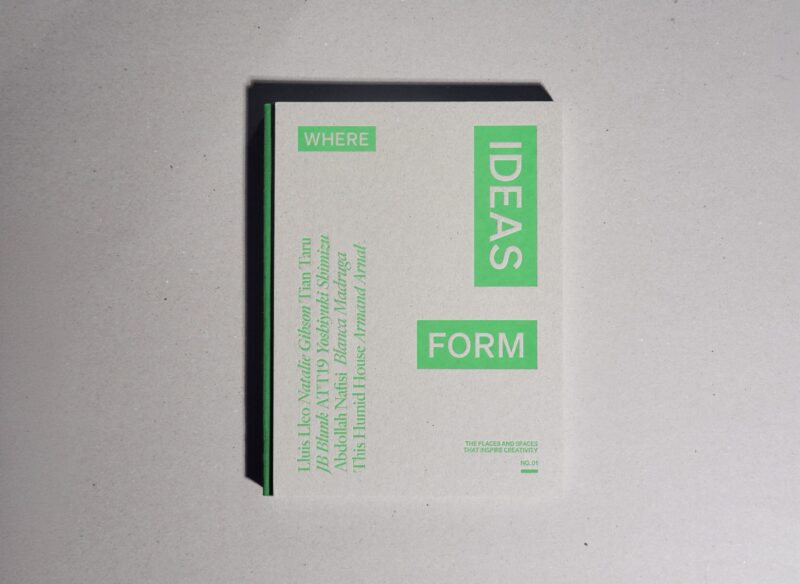
Where Ideas Form
Dancing between solitude and community, tradition and technology, structure and spontaneity, Mark Hooper reflects on creativity and the importance of a creative space – whether physical, digital, or metaphorical.
Words Mark Hooper
Photograph Peter Drinkell
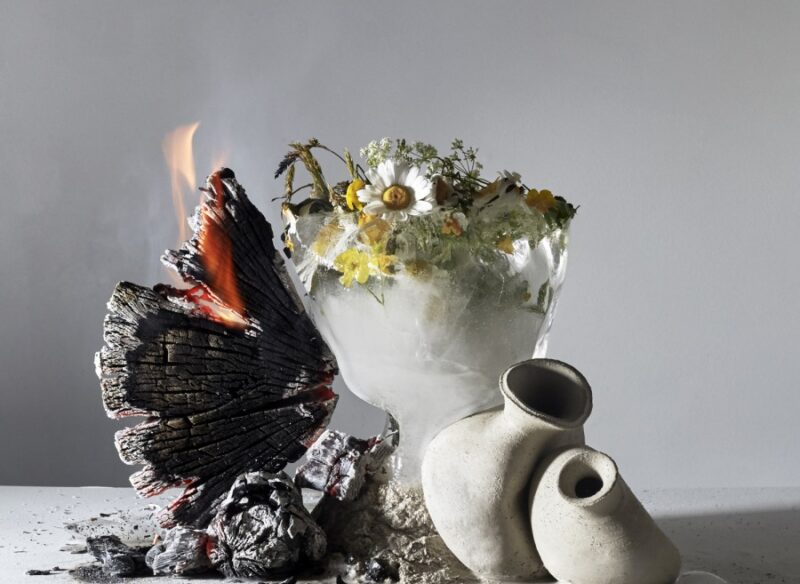
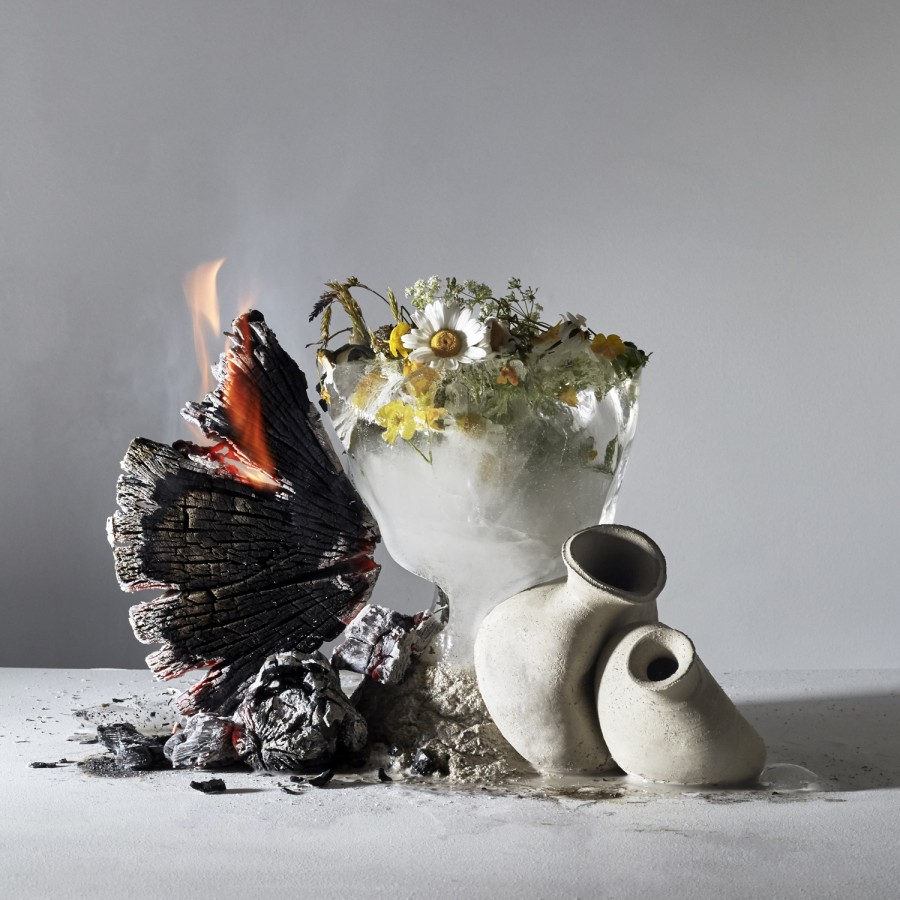
Art Earth Wind Fire and Water, by Nic Webb
A lot of very clever people have spent a lot of time thinking and writing about where ideas form – about the root and source of creativity and how we can encourage the spark of inspiration. For Virginia Woolf, it meant having A Room Of One’s Own: a space that afforded a certain independence and freedom of thought – not least as a woman in the early decades of the 20th century. For Emma Warren – journalist and author of Make Some Space and Dance Your Way Home – it is about the importance of communal, physical spaces – of finding your own ‘place of possibility and boundless creativity… where you could create culture if you applied enough resourceful energy’.
Already we are seeing two very different notions of where ideas form: one stemming from contemplative solitude; the other born of the ‘genuine connections’ that can only be found in social spaces.
But the contradictions don’t end there. The places we’re talking about can be physical, mental or metaphorical. People often talking about ‘being in the right space’ in order to be at their most creative. Maybe Virginia Woolf’s room could be a state of mind as much as an attic room? Talking to my friend Marcus Ross recently (the former editor / founder of Jocks & Nerds magazine), he pointed out the fallacy of A Room Of One’s Own – or at least of those who interpret it in a very literal sense.
If you convince yourself that you could create your masterpiece if only you had somewhere special in which to work, you’ll never get there. You can rent a co-working space, make sure you’ve got all the right kit, go on a long walk for inspiration… but there’s no substitute for just getting on with it. Scrawl your ideas on the back of a fag packet if you want, but just start. Marcus quoted some advice from the author Graham Greene that he had taken to heart: write 300 words a day, every day. That’s it. It doesn’t matter if they’re the worse 300 words ever committed to paper (or screen). Simply by the act of writing, you are creating. Once you’ve committed to those words, you have made something out of nothing. You can tear it to bits afterwards, but by making the act of creativity a part of your daily routine, you have something to work with at least. (That’s 398 words so far, so I’m already over-indexing for the day.)
By far my favourite piece of art I own (it’s a small category) is a line drawing of a woman by the artist Duncan Grant, hastily scrawled onto a small piece of carboard which, if you look on the reverse, turns out to be the back of a notepad, stamped with the name of a Lewes stationery store. Some of Grant’s works change hands for tens or even hundreds of thousands of pounds. This one definitely didn’t. But I love how it reinforces that attitude of Graham Greene’s – the only thing you need to create a work of art is an ink pen and a scrap of card.
Of course, there’s a bit more to it than that. The graft, dedication and routine all helps, but that doesn’t explain the mystery and the magic. There’s been a lot of talk around this particular aspect of the creative process recently thanks to the exponential rate of change in AI development. All those fake Studio Ghibli memes on social media only serve to reinforce how lacking AI can be if used with an absence of truly creative input. But to paint technology as the enemy is to fall into obvious and reductive cliché. Celebrating and promoting human ingenuity doesn’t need to be incompatible with embracing technology: it’s what you do with it that counts.
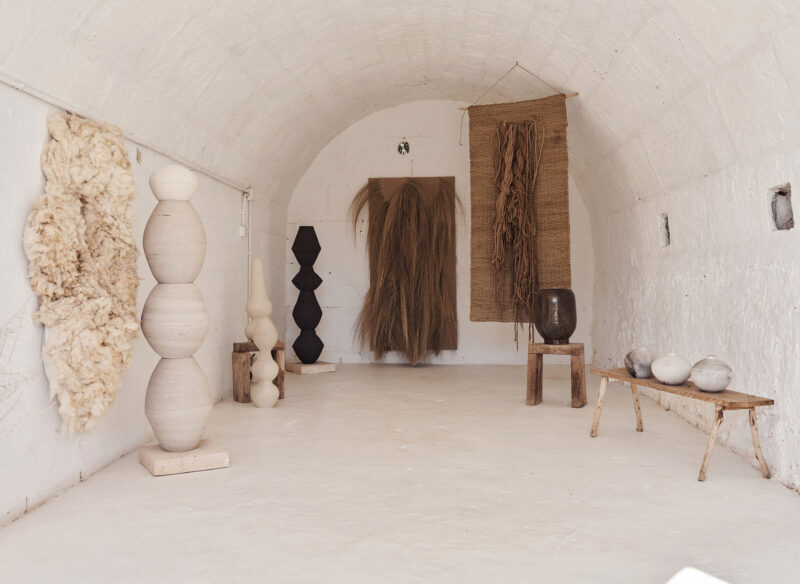
Take, for example, the artist, designer and maker Nic Webb. In many ways, he is the epitome of a craftsman – working from a renovated Shepherd’s Hut in the Sussex countryside, he creates works out of wood (and occasionally clay), using the raw material that the landscape offers up to him, and including the processes of nature in his methodology. For instance, he selects local wood produced from windfall that he then shapes into various forms – sometimes purely sculptural, other times for practical use in the home as vases, lamps shades, tables and more. As well as carving into the logs and stumps he collects, he also often singes them with fire before plunging them into pondwater, utilising the elements to achieve his final vision. And yet Nic, of all people, is the one that has given me the most convincing argument for the use of AI in creative projects. For him, it’s not a shortcut – except in a very literal sense.
Why waste precious wood, he reasons, if you can feed all your ideas into Midjourney, see what it comes up with, and then expand your designs accordingly? The way he explains it, it is just like sketching – the 21st century equivalent of that Duncan Grant drawing in a notepad, that may eventually lead to a masterpiece.
Creativity involves a lot of pain, doubt and frustration. The appeal of AI to some people is that it can erase all that – but that’s exactly the wrong attitude for those wanting to use it to the best of its potential. Take your cue from Nic. Agonise over every decision. Feed your data into the machine by all means, but be prepared to interrogate what it spits back out at you.
Deliberating over that opening sentence, worrying about the obstacles that only present themselves the further down the path you go – these are the things that make us human. And since humans first used tools to help them in the creative process, they have always embraced cutting-edge technology (hence the name).
Of course, we should never see it as a one-way street, either. In her brilliant book The Sound of Being Human, Jude Rogers explores the psychological and neurological effects that human creativity can have on us. For Jude, music is a communal experience. To push the concept further, Andrew Weatherall once expanded on the idea of music as communion for us, claiming, ‘It’s all about transcendence… Direct contact with the divine without the middleman: that’s what I’m aiming for.’
The writer and therapist Kevin Braddock runs Soma Space in Shropshire – an innovative combination of gym and psychiatrist couch. Kevin reinforces the links between physical and mental wellbeing, drawing on his experience running ‘firegazing’ sessions – a sharing of stories and experiences that draws from the same communal experiences that Jude, Emma and Andrew all saw as the lying at the heart of human creativity.
We can’t claim to have all the answers, but we have some good questions. And in our exploration of the places and spaces Where Ideas Form, we hope to share the thoughts of some very clever and very inspirational people.
The only manifesto we can offer is that creativity should be touched by hands, shaped by humans and worried about by brains. Beyond that, use all the help you can get…