Dada-days founder Lisa Herschel on discovering her hidden studio cellar
Founded in 2021 by Lisa Heschel, dada-days has established itself as the go-to platform for anyone looking for something creative to do if they find themselves on the island of Mallorca.
Words Holly Fielder
Photograph Sam Walton
With an offering ranging from photography lessons around the coastal town of Deià, set at the base of the Tramuntana mountains, to hand-building pottery classes in sun-soaked Sóller – dada-days is capturing the attention of many of the growing number of creatives being drawn to the Balearic island.
Encouraging a more conscious way of travelling, Heschel offers travellers unique opportunities to stray from the well-worn tourist path. Through inviting visitors and residents into local artists’ studios and connecting them with local creatives, dada-days creates space for meaningful creative and cultural exchange.
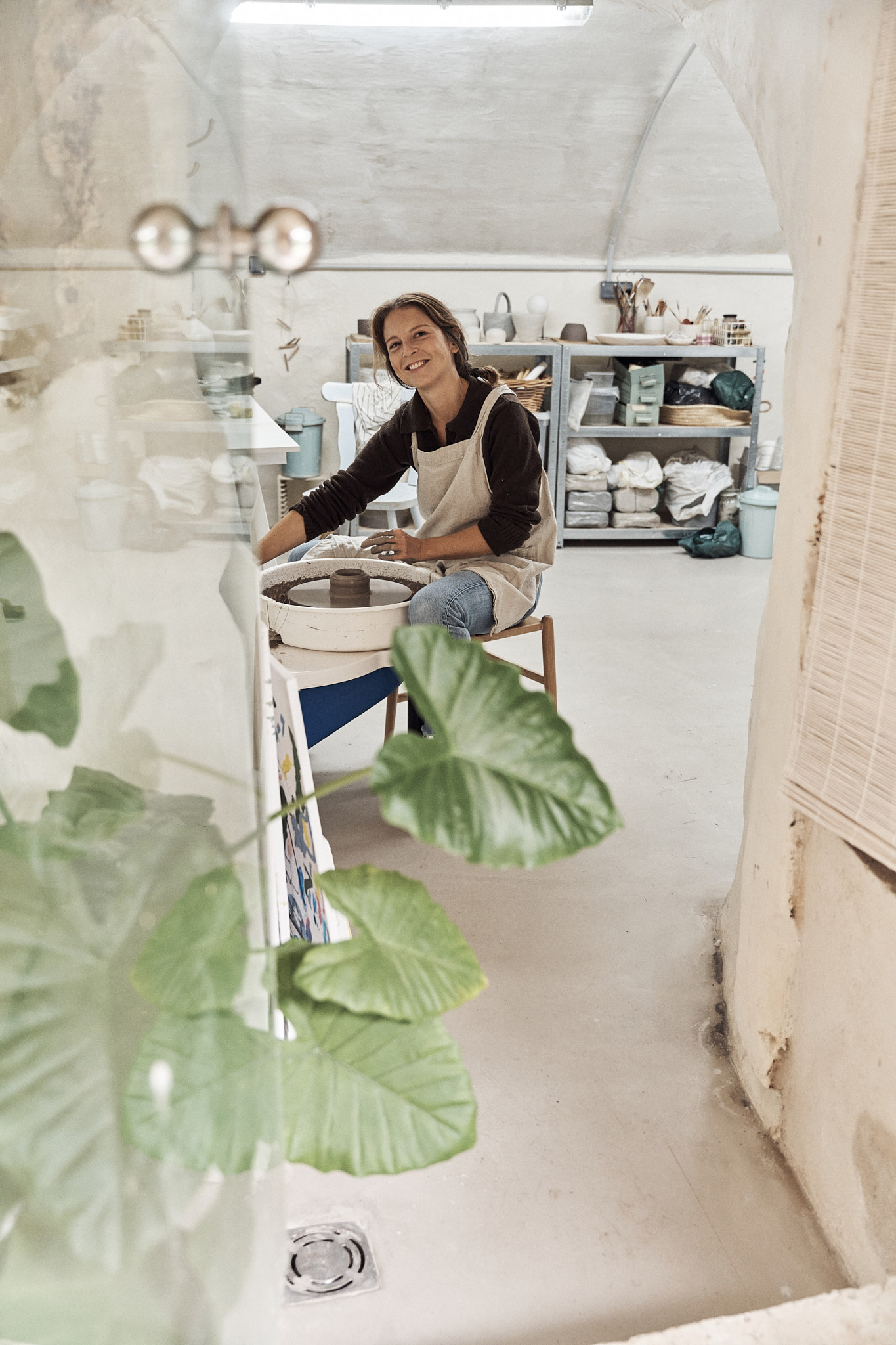
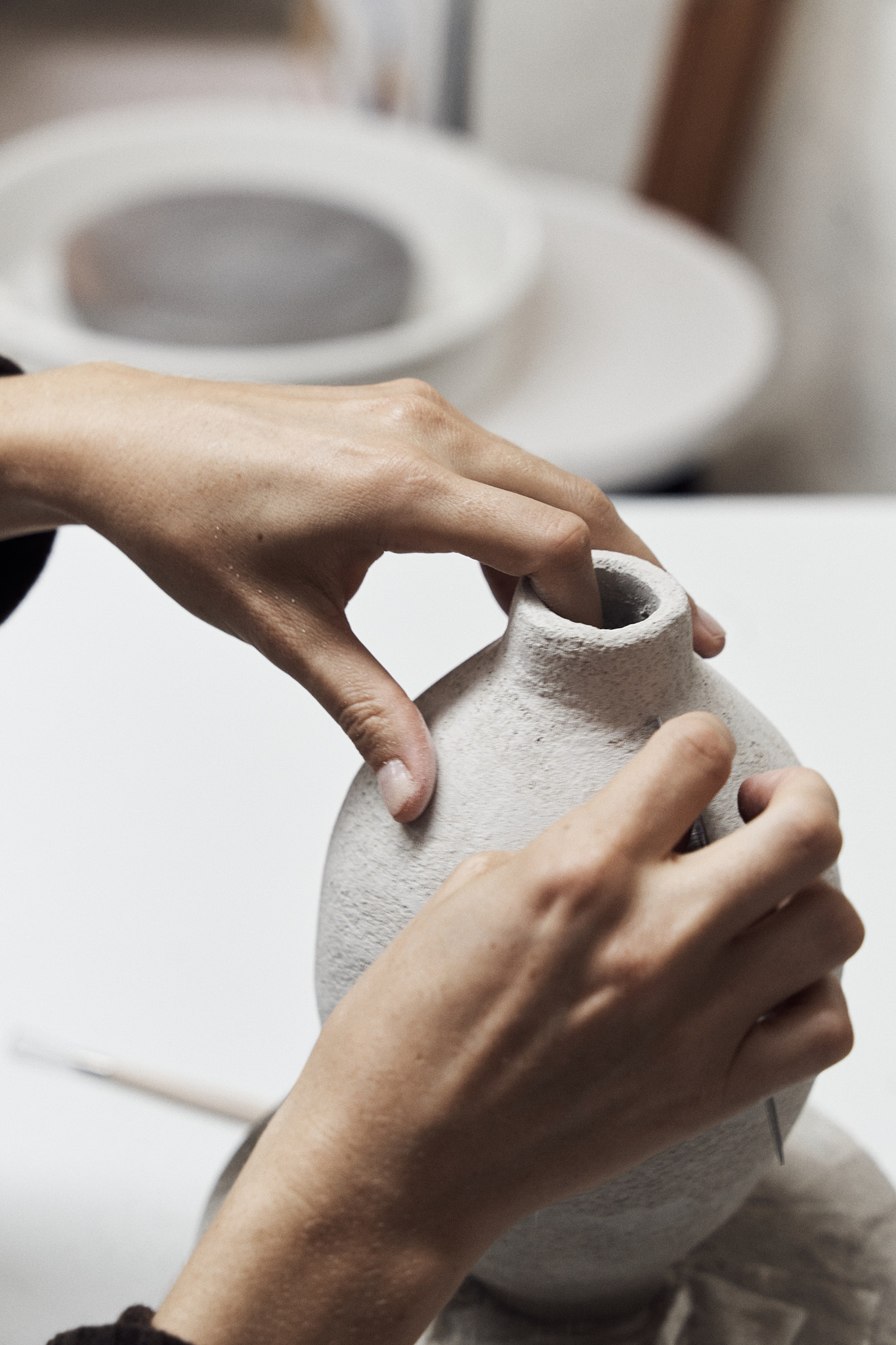
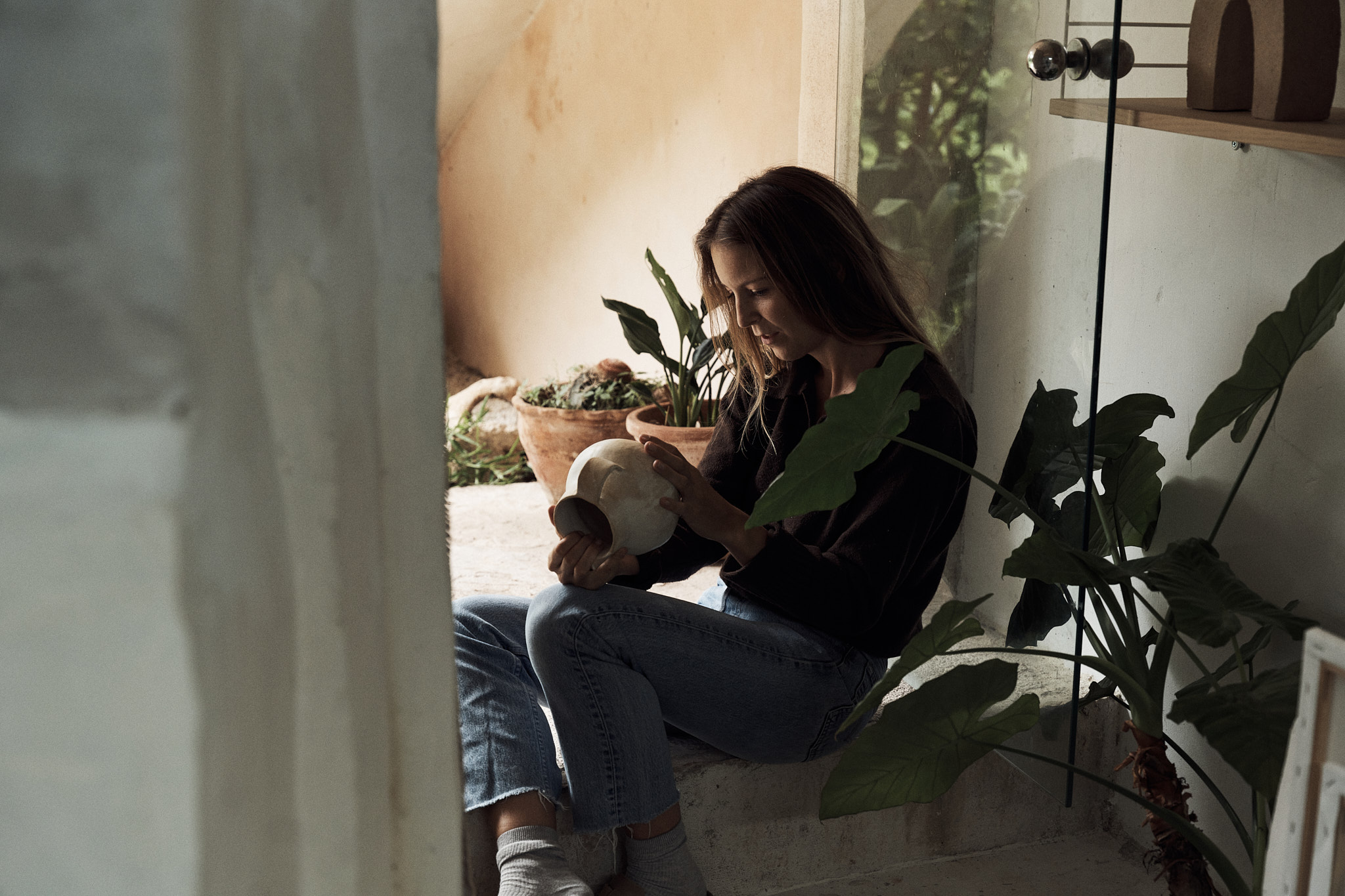
We take a trip to Hechel’s own studio, set in the small town of Campanet near the north of the island to find out more about her practice and what makes the space so important to her. As an avid ceramicist who quickly fell in love with the practice, Lisa had always dreamt of having her own studio to work from. It was only when she made the move with her young family from Berlin to Mallorca that she was able to realise this dream; converting the cellar of her house into a space where she could escape to and nurture her own creativity.
Evoking the feeling of a Mediterranean cave, the white-washed walls and sloped and curving ceiling of the underground home-studio have a grounding and immediately calming effect. A simple and unpretentious space, she laughs as she shows us the top of the washing machine that she uses as a stable base on which to wedge clay.

A ‘hole-and-corner’ is an old English term meaning a secret place: somewhere you go to escape the world, to be inspired: to contemplate and create. Where is your ‘hole-and-corner’?
It took me many years to find a space of my own where I could express my creativity. When me and my little family were looking to move from Berlin to Mallorca, there was a hidden cellar in one of the homes we were viewing and I immediately envisioned a studio space. For me it was a done deal. To have my own studio was something that had always been a dream of mine. The cellar was full of rubbish and out-dated machines when we first moved in; but after a little work – resealing the walls, pouring fresh concrete, installing new appliances – it became my cosy ‘hole-and-corner’. Now that I have settled into my studio, it has become my happy place – somewhere I can create most freely and think most clearly.
Can you explain why it is so special to you?
Having my own space where I can work helped me to start taking my creativity more seriously. For me, having a studio was anything but a given. I am extremely grateful for it. In my past, I was rarely able to make room for this part of myself, but since we moved from an apartment in Berlin to a house in the country, we suddenly had the opportunity to repurpose a space for me to treat myself, giving my passion space to grow.
Is it important to you to have somewhere to escape to?
Since becoming a mum, I’ve found myself needing to really stop and create time for myself. I’m very fortunate to be able to create a space in my life, both literally and figuratively, where I can fully commit to my creative process. Before, I used to go to a co-working studio for ceramic artists in Berlin (Clayground) and another one in Palma (Mostaza), but I couldn’t fully relax there the way I can within my own four walls. Being creative is my way to meditate, to slow down or think deeply about things… It’s not something I take for granted, I feel very lucky to be able to escape and have this kind of time for myself.
What do you like to listen to when you’re working?
Let’s be honest here – not fancy, but I actually really love to listen to the Mexican rock-band Maná while I’m getting creative. I came across their music when I did a high-school exchange programme for a year in Argentina. I was 16 and my host family always listened to them. My Spanish was pretty bad back then, so I couldn’t express myself fully the way I wanted to, but when we were all packed together in my host father’s car, singing to Maná together, the music bonded us. Ever since my time in Argentina, this music calms me; I love to listen and sing to it in the studio. If you’re curious, I recommend the songs ‘Manda Una Señal’, ‘Labios Compartidos’ and ‘Vivir Sin Aire’.
What elements do you think make a perfect ‘hole-and-corner’?
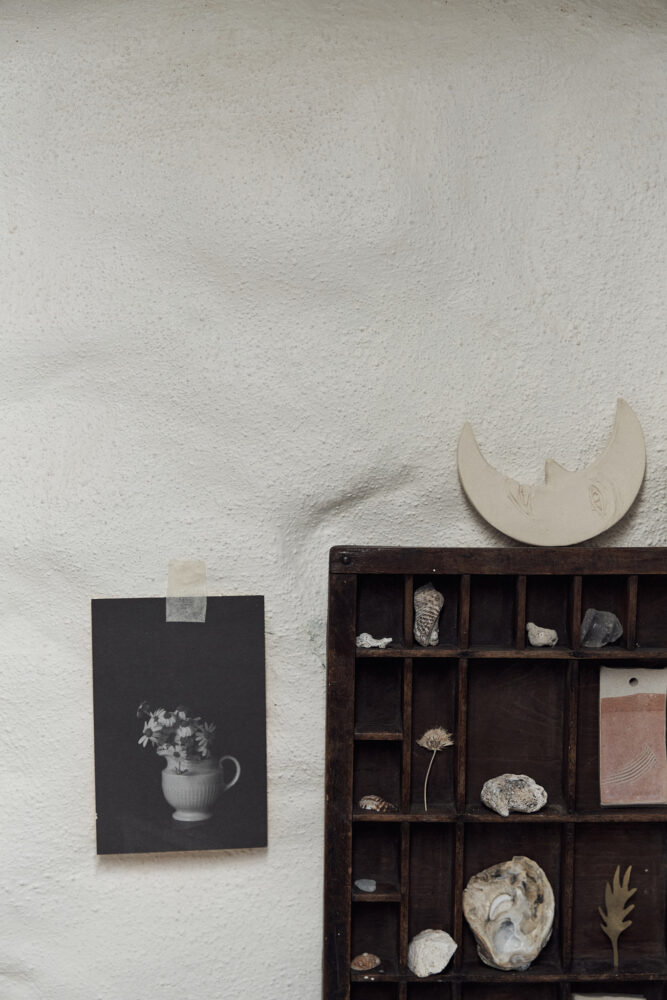
We are all constantly surrounded by technology, media and machine-made objects. Since making my own ceramics, I’ve begun to really value things that take time and heart to make. I’ve collected furniture from flea markets, books, postcards, photos, little scribbles and natural findings from the sea to fill my studio. I believe these kinds of objects, especially things that are handmade or found spontaneously, are more personal and unique, and give a space more personality and soul. For me, a soft colour palette – white, beige, light blue – also helps in creating the perfect setting. Coating the walls in these colours calms me. In the end, a hole-and-corner should be a place just for you, a place that really brings you joy. Surround yourself with things that make you smile, that remind you of a certain day or feeling, or a vision you have for yourself and your work.
Is it private to you or do you often have other people visiting?
It’s very private, since it’s in my own house. I share it with my four-year-old daughter and sometimes her cousins or friends. I love to create with kids because they don’t have all the boundaries and self-doubts most adults do, so they come up with the best ideas and inspire me to think outside of the box.
Which three words would best describe your ‘hole-and-corner’?
Mediterranean; white; cave.