The House that JB Built
The daughter of legendary artist sculptor and artist JB Blunk, Mariah Nielson has committed to restoring and preserving his extraordinary legacy, the little house in the California woods where he made everything by hand, from the towering redwood entrance arch to the mismatched pottery teacups
Words Tamsin Blanchard
Photograph Christopher Sturman
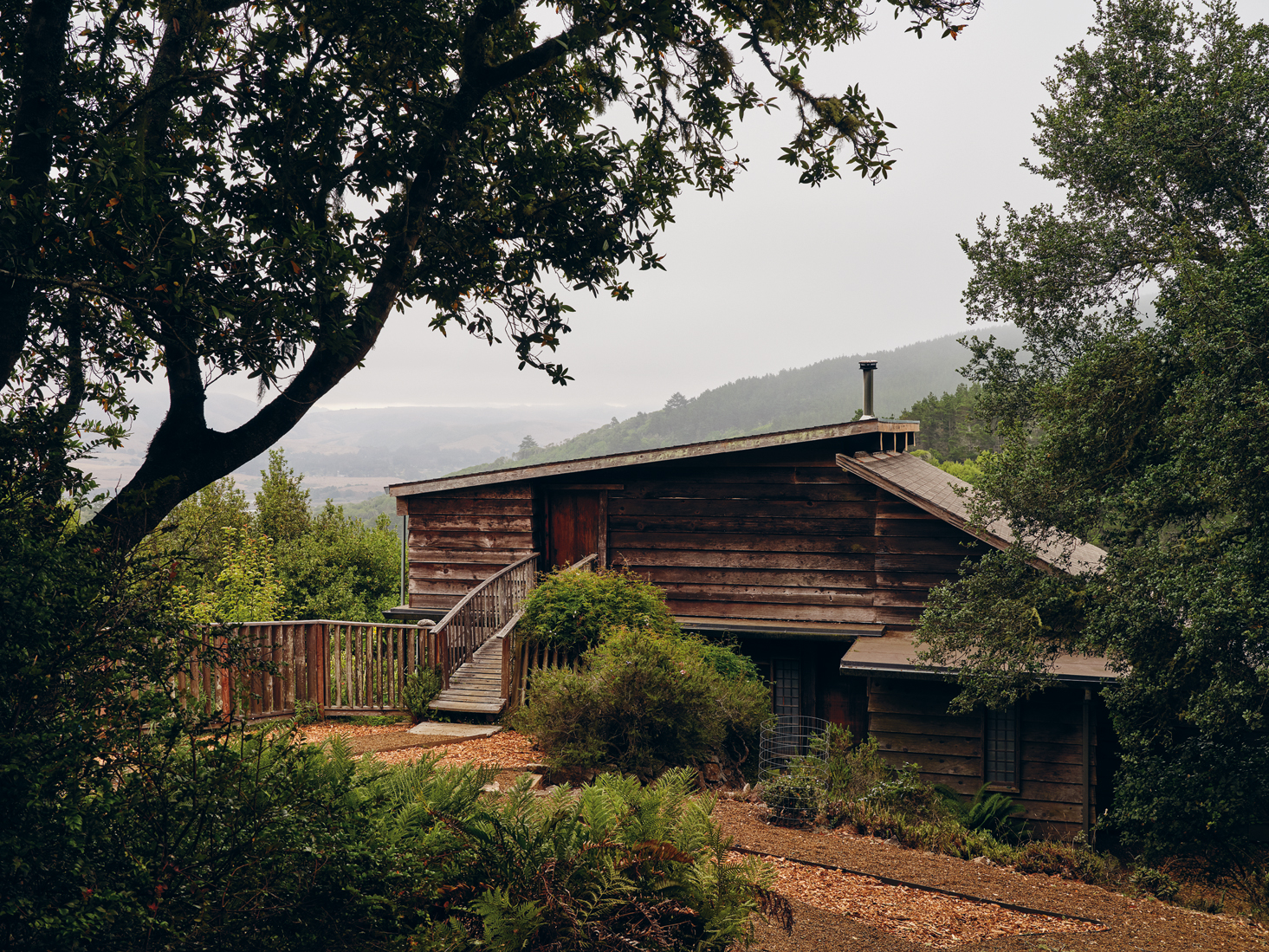
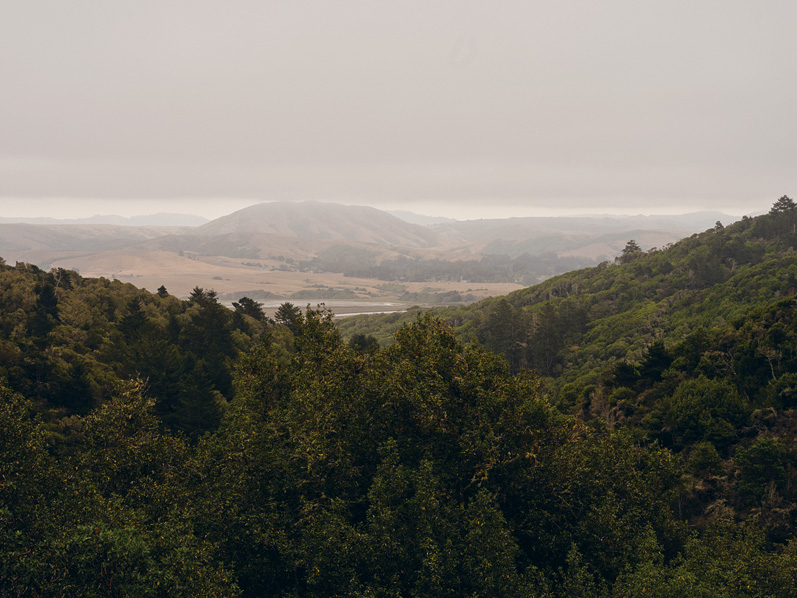
Mariah Nielson grew up in the house her dad built, on a ridge in Inverness, California, overlooking Tomales Bay. ‘It’s at the end of a dirt road, you can’t see or hear any neighbours,’ Nielson tells me when we meet in London inNovember, where she lives with her husband and their young son. ‘You feel like you’re alone in the woods when you’re up there, it’s very peaceful.’
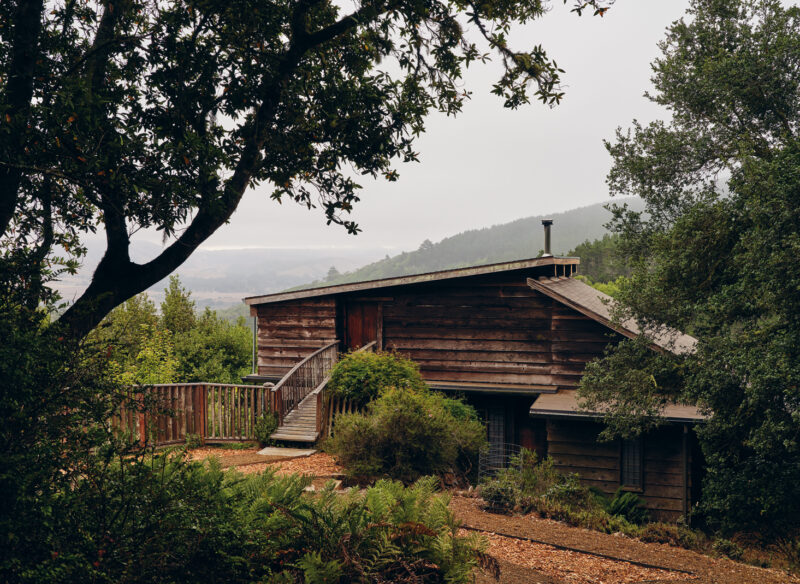
Together with his first wife, Nancy WaiteHarlow, JB (short for James Blain) Blunk started to craft the small wooden house in 1958. His friend, the surrealist painter Gordon Onslow-Ford, had invited him to build a house on an acre of his land and Blunk used what he could get his hands on, from salvaged wood and scraps, to abandoned telegraph poles and stones collected from the shore.
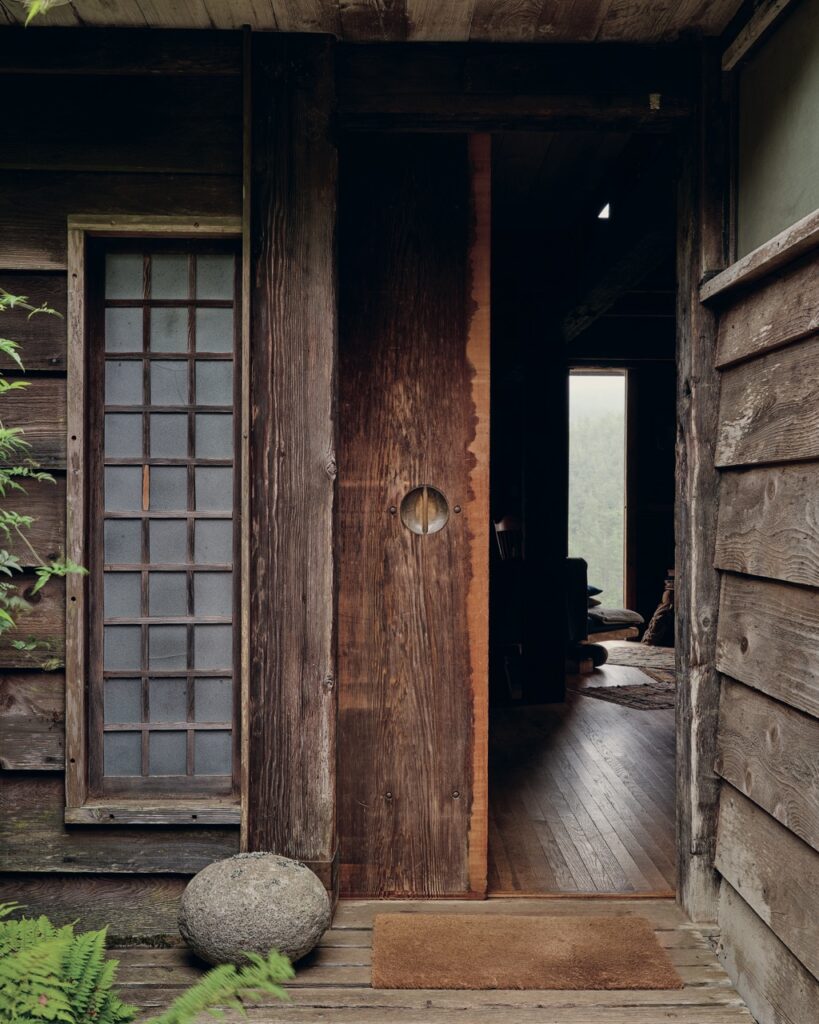
The house is as humble as it is extraordinary, complete with outdoor shower, the rustically chiselled cypress wood sink, the redwood sculpted arch that marks the entrance into his expressive world, and the sliding front door –like the ones he had seen as an apprentice potter in Japan, after he was drafted for the KoreanWar in 1949. He created pretty much every fixture and fitting, from the ladder leading up to the loft bedroom to the smooth, phallic, balsa wood light pulls, the door handles made from melted wine bottle caps, the wonky tea cups, and the exquisite ceramic soya sauce bottle made in 1975, that is still in use today.
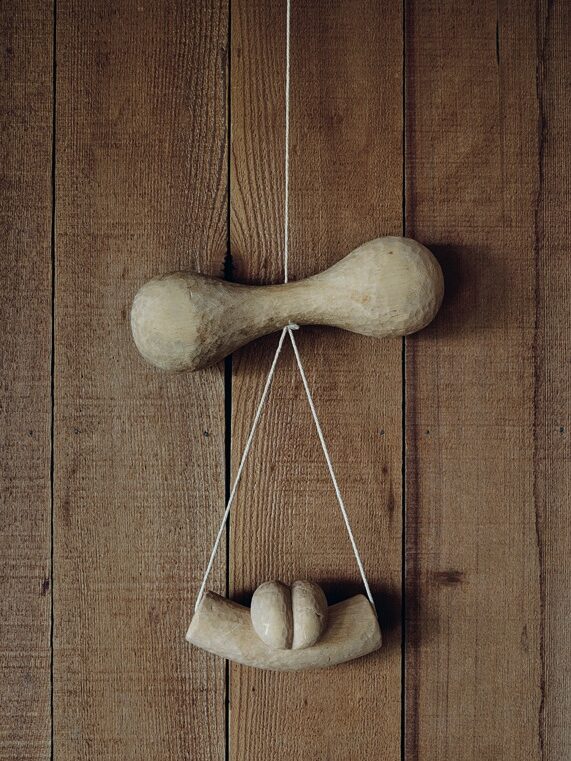
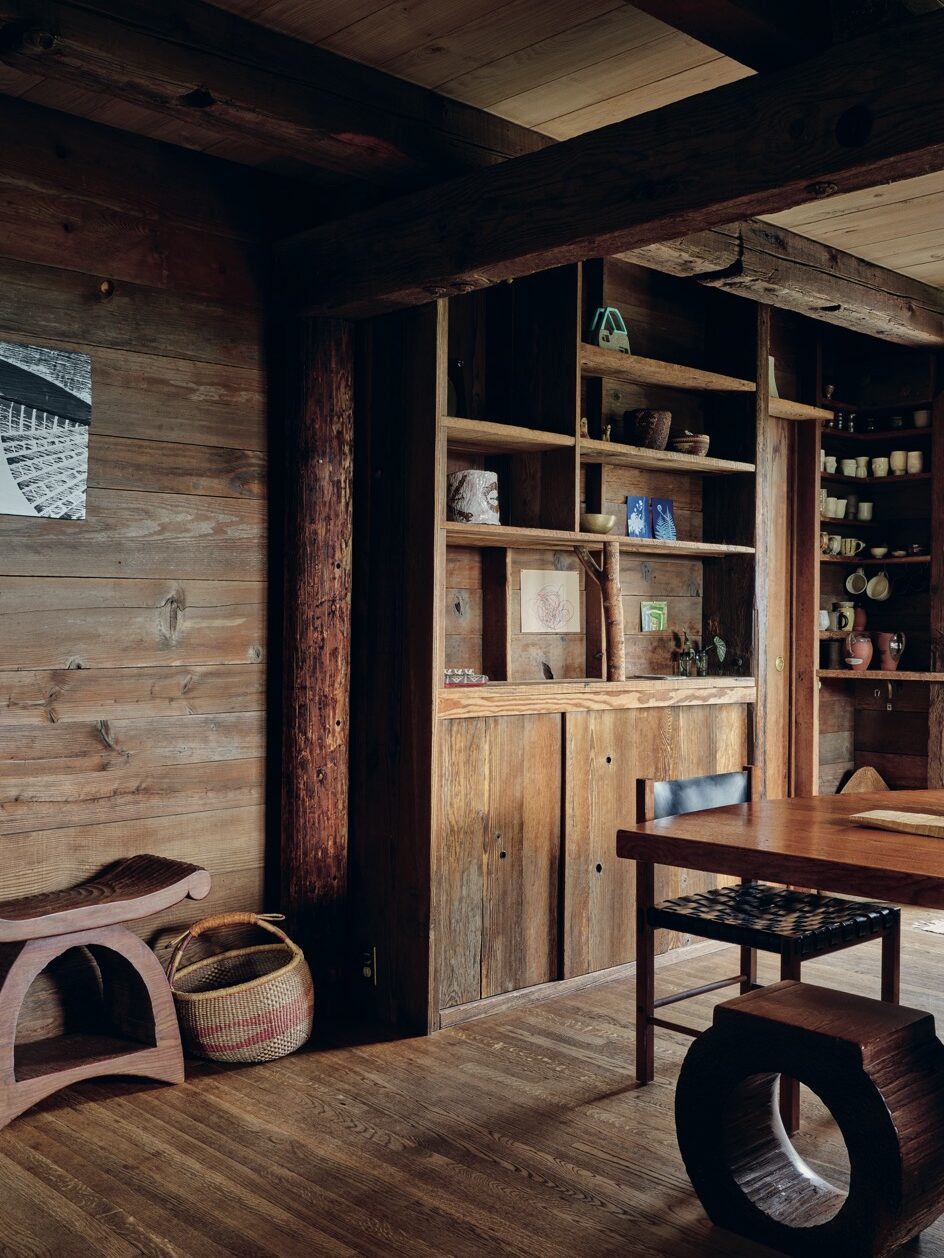
The house is as humble as it is extraordinary, complete with outdoor shower, the rustically chiselled cypress wood sink, the redwood sculpted arch that marks the entrance into his expressive world, and the sliding front door –like the ones he had seen as an apprentice potter in Japan, after he was drafted for the KoreanWar in 1949. He created pretty much every fixture and fitting, from the ladder leading up to the loft bedroom to the smooth, phallic, balsa wood light pulls, the door handles made from melted wine bottle caps, the wonky tea cups, and the exquisite ceramic soya sauce bottle made in 1975, that is still in use today.
‘I think this house is such a kind of exemplar, or a reflection, of this moment in time when all of these natural resources were so readily available,’ says Nielson, who trained as an architect. ‘I can’t imagine what it would cost now, or where you would get redwood like that.You just can’t make things like this anymore.’
Blunk built the house as a functional home for his family, but also as an expression of his art. While the house was to become his life’s work, Blunk made his name as a sculptor, known primarily for his large-scale pieces in native Californian wood; such asThe Planet, a public artwork commissioned in 1969 for the Oakland Museum of California, carved from a single redwood root structure, and the wonderfully organic large-scale redwood sculpture that looks like its growing out of the floorboards and is still the centrepiece of the pioneering SanFrancisco vegetarian restaurant, Greens.
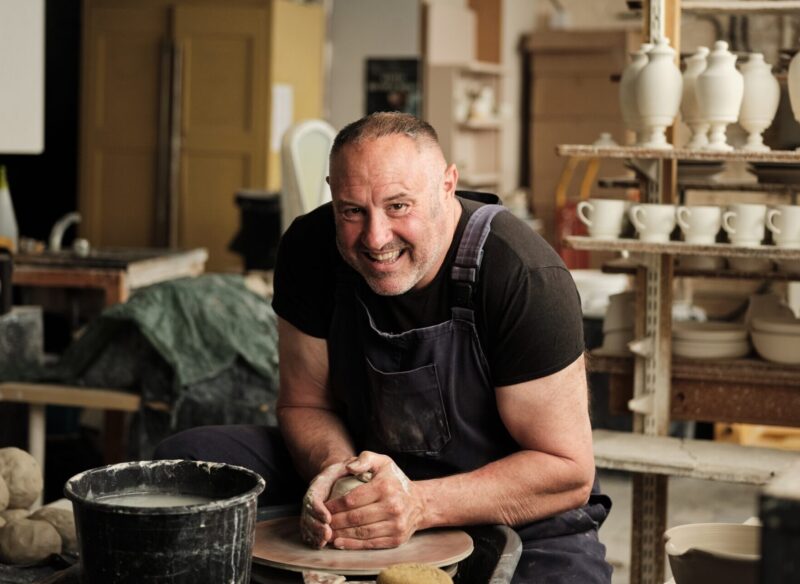
Blunk also worked in bronze, painted, and made jewellery as well as furniture. He trained as a ceramicist and his time as an apprentice in Japan in the early 1950s was to be life-changing. There, he met the artist Isamu Noguchi who became a life-long friend and who introduced him to ceramicist Kitaoji Rosanjin and master potter Toyo Kaneshige. Working with Kaneshige, Blunk learnt how to make traditional Bizen ware, made in the village of Imbe in Okayama and fired using red pinewood. During his time in Japan, he absorbed the philosophy of Shinto; it was this deep connection with nature that became the heart and soul of his work. Inspired by his time inJapan, he built two tokonoma alcoves, designed to show off objects worthy of appreciation, into the bedroom and the kitchen in the house.
‘I think this house is such a kind of exemplar, or a reflection, of this moment in time when all of these natural resources were so readily available,’
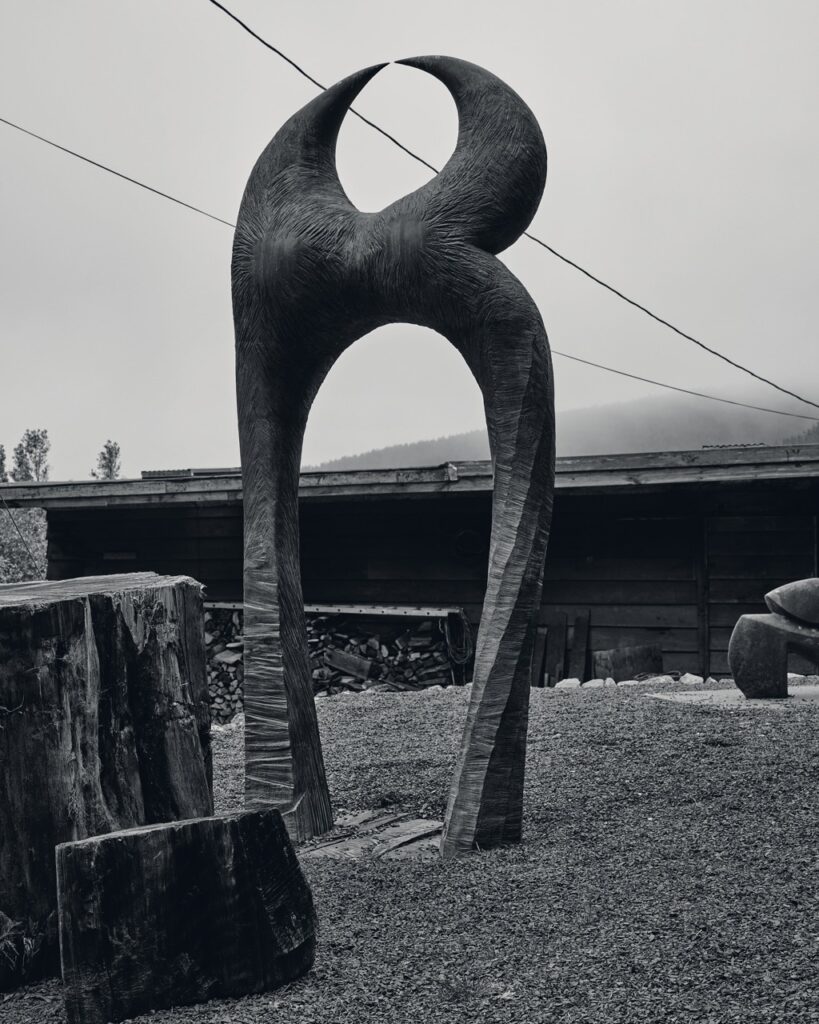
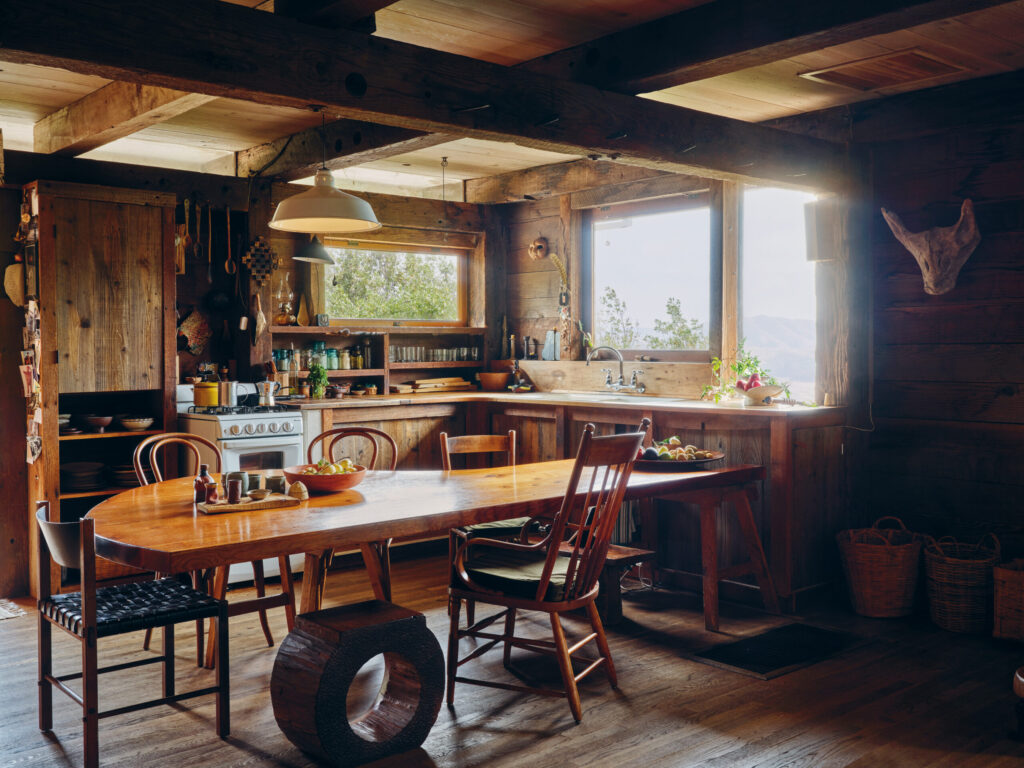
Blunk was dedicated to his work, which he did compulsively, seven days a week, stopping at 4pm for an hour’s tea break. Although his off-grid beatnik lifestyle looks idyllic (before ‘off-grid’ was even a thing), life wasn’t always easy. ‘My father and Nancy were really poor,’ says Nielsen, ‘and they were building this house… it put a lot of pressure on them as a couple, with two young children. When I talked to Nancy about it, she just said, “Imagine how hard that was? There was no money. It was cold. We were living in this half-finished home”.
‘My father was literally hunting deer as subsistence for the family. She was making their own clothes. And they were growing as much food as they could and spending very little money on anything. They weren’t travelling. They weren’t really socialising. So it was a very challenging experience.’
Nancy and JB had two sons together, Rufus and Bruno, who both worked with their father throughout his life and have since established themselves as sculptors, following in their father’s footsteps. After the couple’s relationship broke down in the 1960s, Blunk met Christine Nielson, who was a teacher at his sons’ school.
By the time she moved in with Blunk, in the late 1960s, the house was more complete, though as Mariah Nielson told me, ‘It was never really finished, it was always a work in progress. That’s what he described it as, and there’s so much that we still haven’t done.’ She is in the process of overseeing her father’s studio building being moved, ‘Egyptian-style’, after the estate bought the land the house was built on and the studio was found to be outside of the land boundaries.
Seeing the place now, stripped back of much of the clutter the couple collected, with her mother’s textile hangings, collections and pictures tacked to walls, all safely archived and stored, it still feels like a warm and welcoming family home. In the summer, the house was used by her mother and her stepfather so that he could recuperate after an operation and the various family members still use it from time to time.
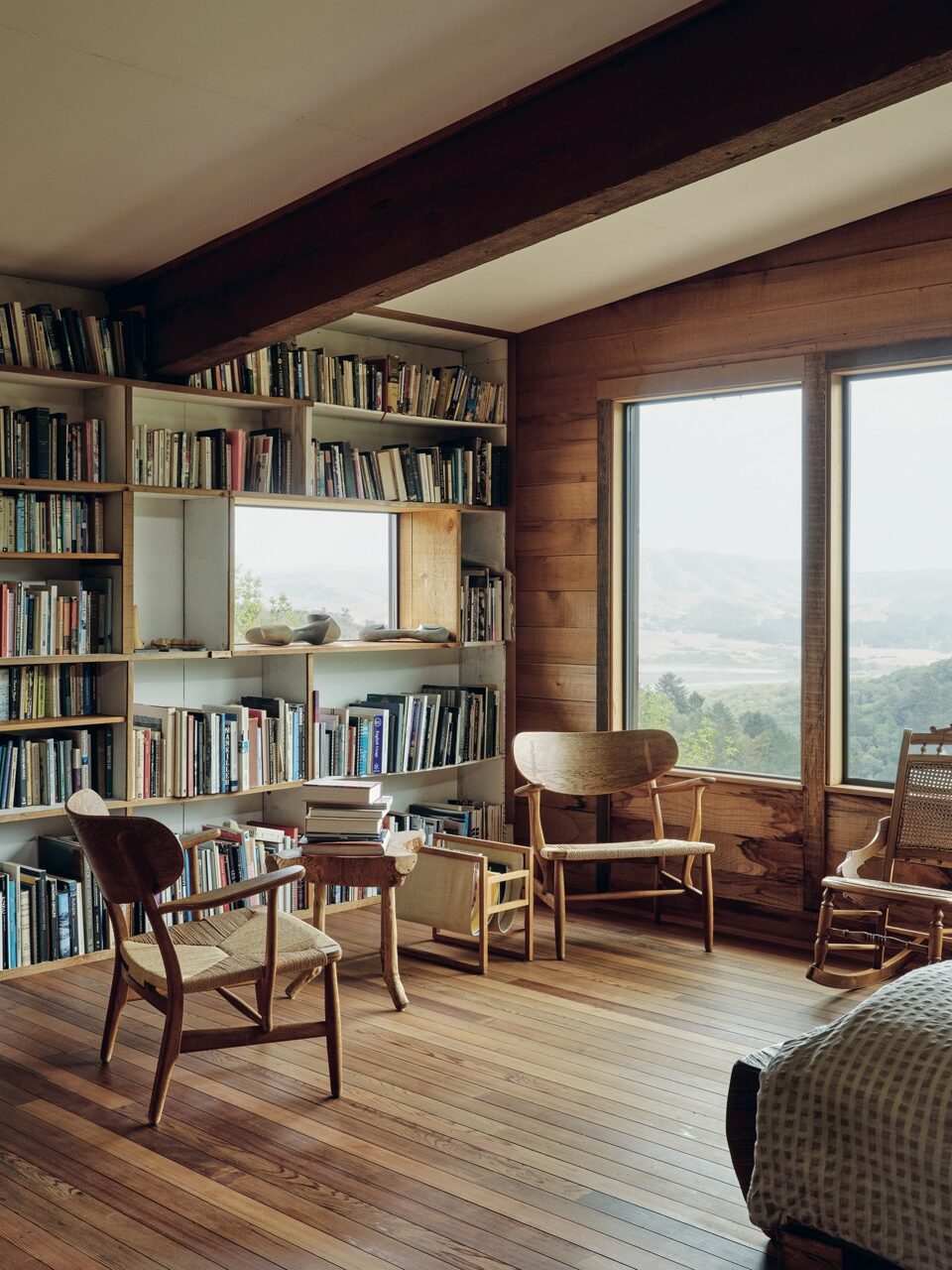
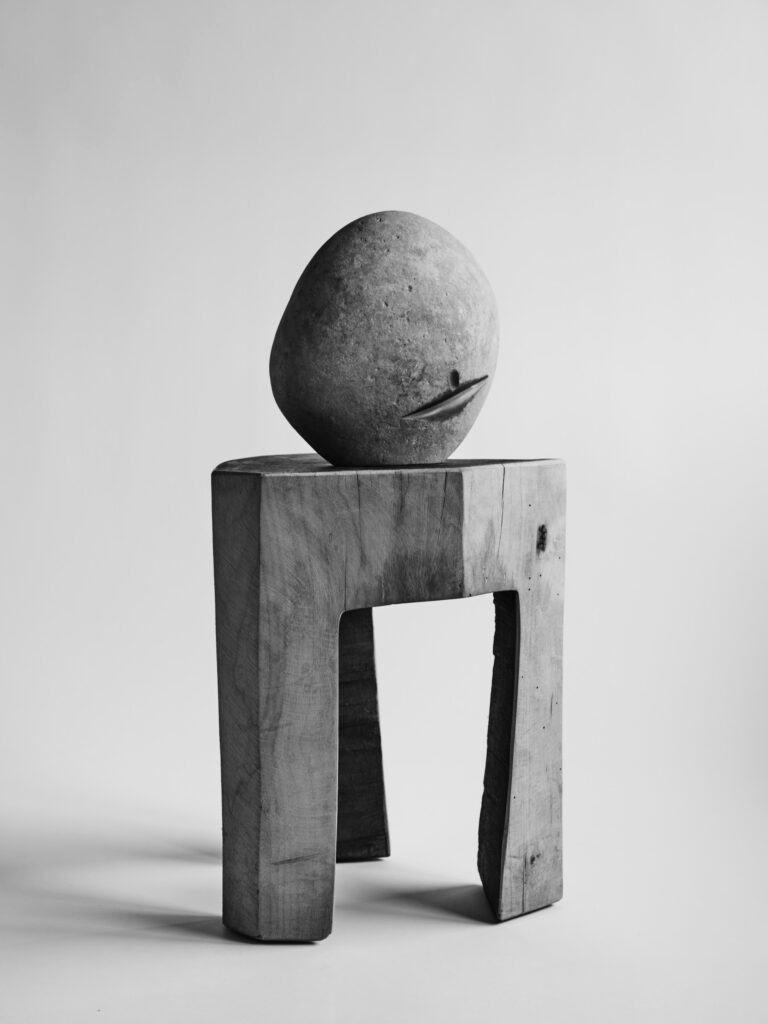
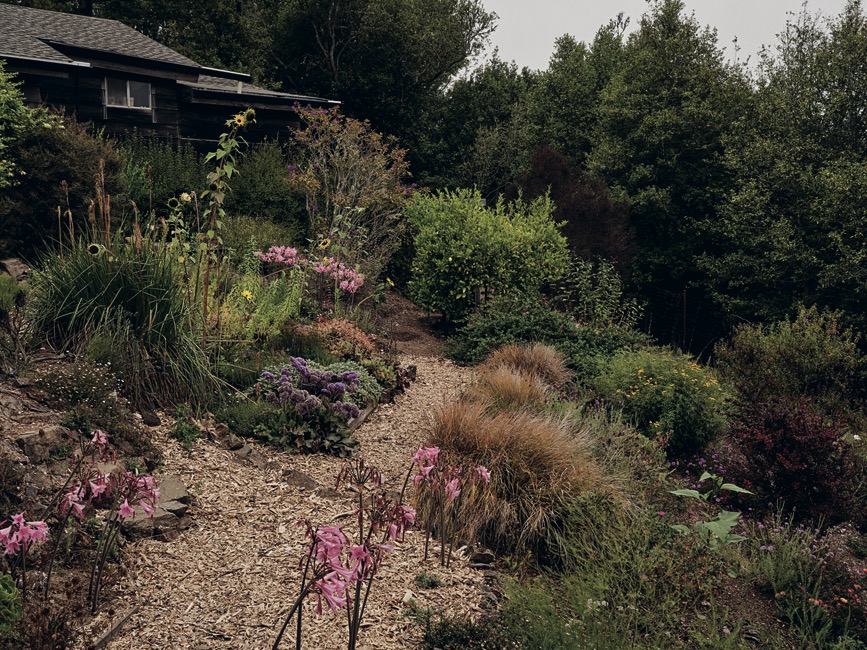
Nielson was born in 1978 and grew up with her brothers as a free spirit, drawing, playing, creating pretend restaurants. ‘We felt safe and it was such a safe place. It was a very small community. We knew everyone, and everyone knew us. I could run around in the town of Inverness with friends until evening, and then I’d walk up the hill or maybe one of the parents would come down and pick me up, but it was very relaxed.’ She remembers watching her father at work. ‘He was called “Master of the Chainsaw”. It was sort of his nickname, he really was so fluent and comfortable using that tool.’
Working with the chainsaw was so physical, and the vibrations so intense, explains Nielson, that Blunk could only manage it for 20 minute sat a time, then he would go and do something else in his studio, like glaze ceramics he made using the local clay, or piece together a pair of delicate earrings or a necklace. He originally bought the chainsaw to cut up firewood and do odd jobs to earn money, after he returned from his time in Japan. He would take regular trips to source wood from loggers. ‘He had a beautiful old VW flatbed pick-up truck from 1968, which was bright blue. I was so embarrassed by that car when I was younger.’
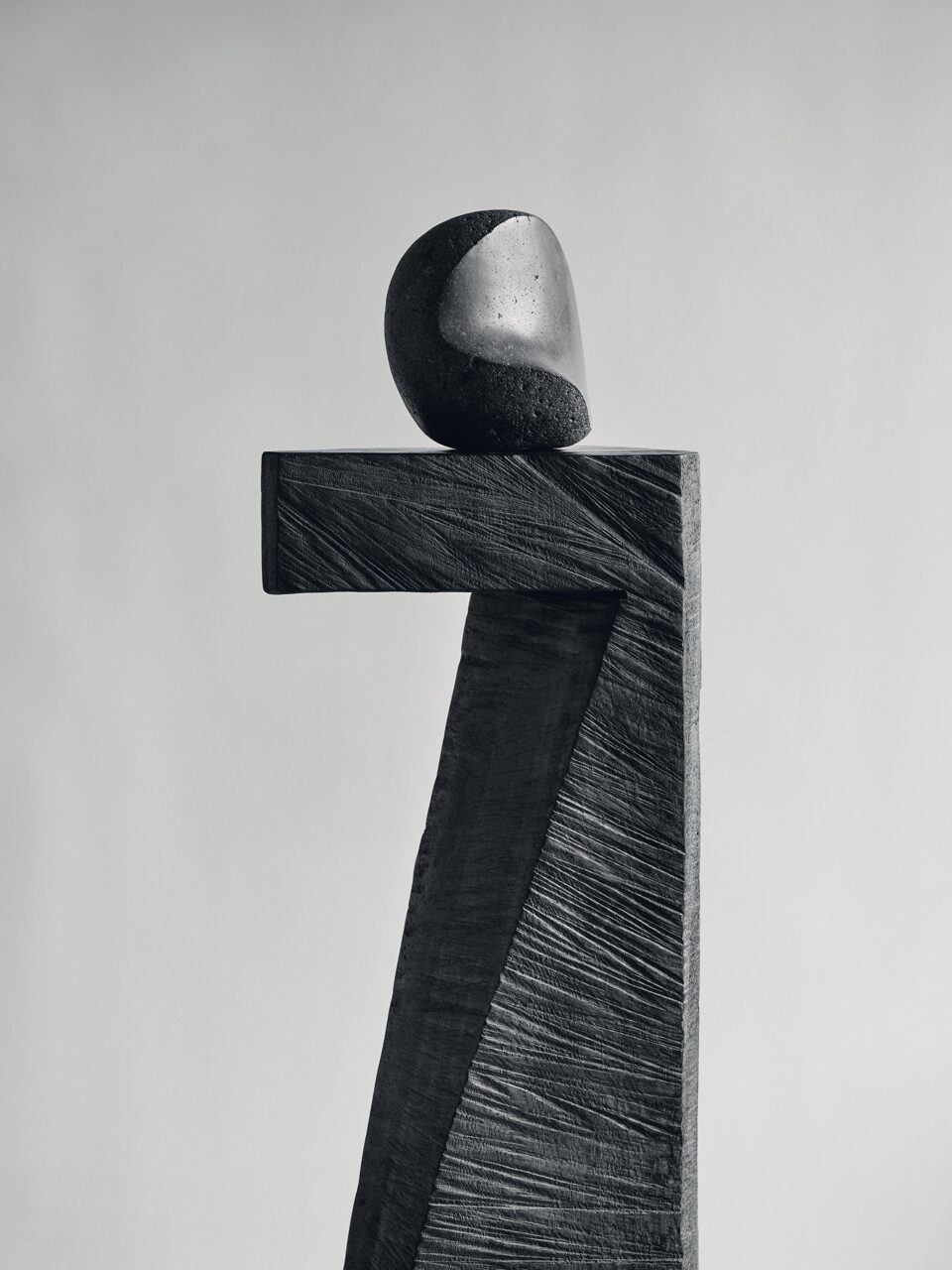
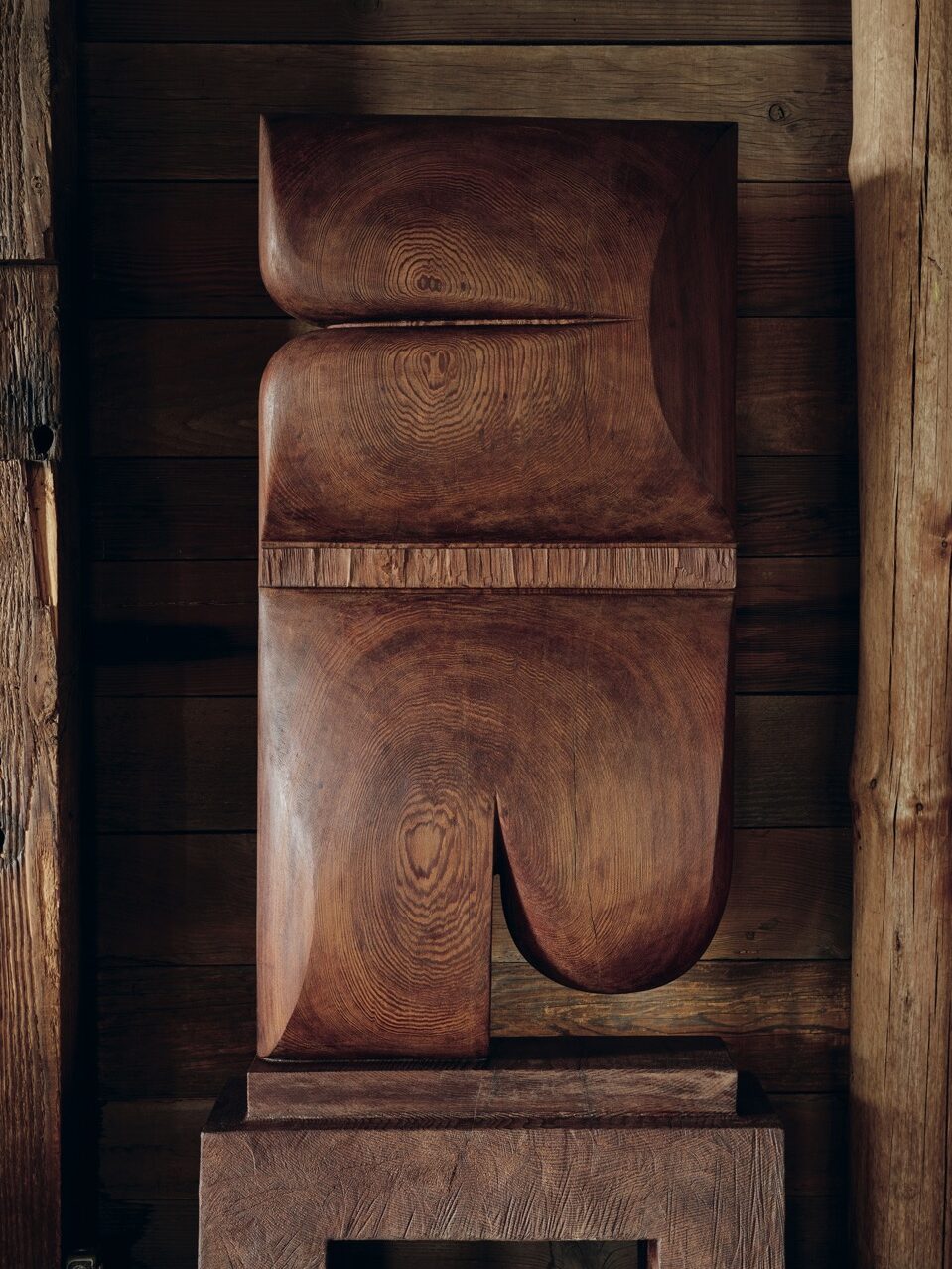
Blunk died in 2002 and the family continued to use the house as well as offering it for artists’ residencies. After her mother moved out in 2007, Mariah Nielson began to archive the estate. ‘We had to take everything out, catalogue and document it. And then we only put back a handful of pieces. Once I took everything out, I realised how beautiful the architecture is and how it had been covered up by all these layers of artworks and things.’
In 2016, Nielson launched a brand called Permanent Collection, with her friend Fanny Singer, daughter of the legendary Californian chef Alice Waters. They sell pieces of art and design influenced by both of their upbringings, including a small selection of reproductions of Blunk’s jewellery and a selection of ceramic pieces. But Nielson intends to focus on keeping her father’s legacy alive.
Interest in Blunk was reignited after Nielson published the first monograph of his work. As well as ongoing work to maintain the house and the two studios, she is curating the Blunk Space gallery and research centre inInverness, with exhibitions featuring artists and makers. Nielson intends to spend more time in Inverness with her family, and will open Blunk House to the public for tours, alongside a programme of exhibitions at the gallery space and artist residencies. ‘It was where I was born. It’s where my father died,’ she says. ‘So much life has taken place in that space and that’s why I want to continue to invite people to spend time there and have the house filled with energy and activity.’
‘So much life has taken place in that space and that’s why I want to continue to invite people to spend time there and have the house filled with energy and activity.’