Flowered Up
Chef Zuri Camille de Souza on the ‘little jewels’ she forages from nature
Words Tamsin Blanchard
Photograph Sam Walton
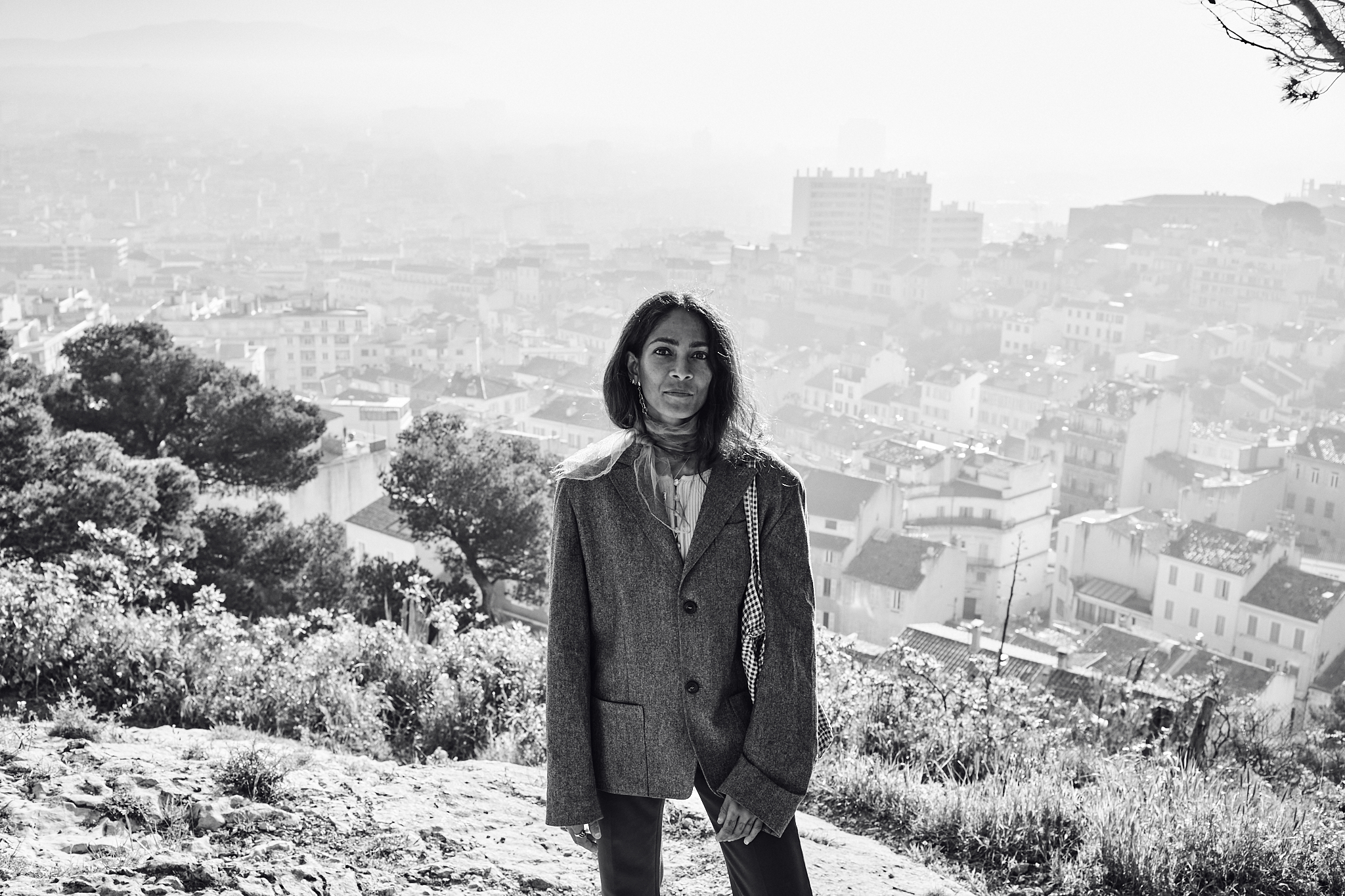
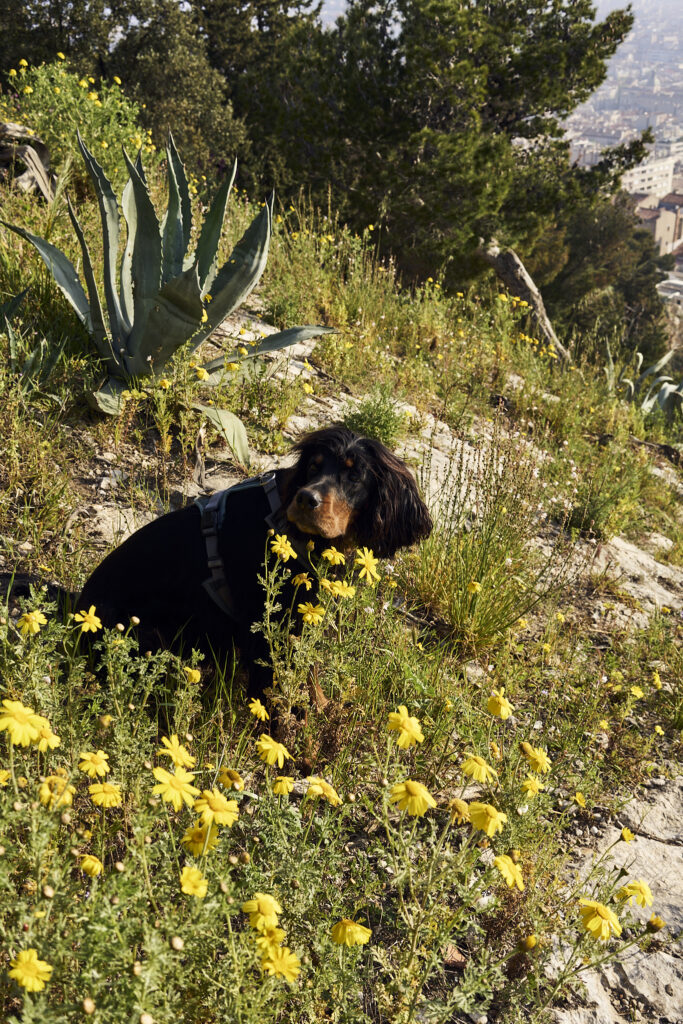
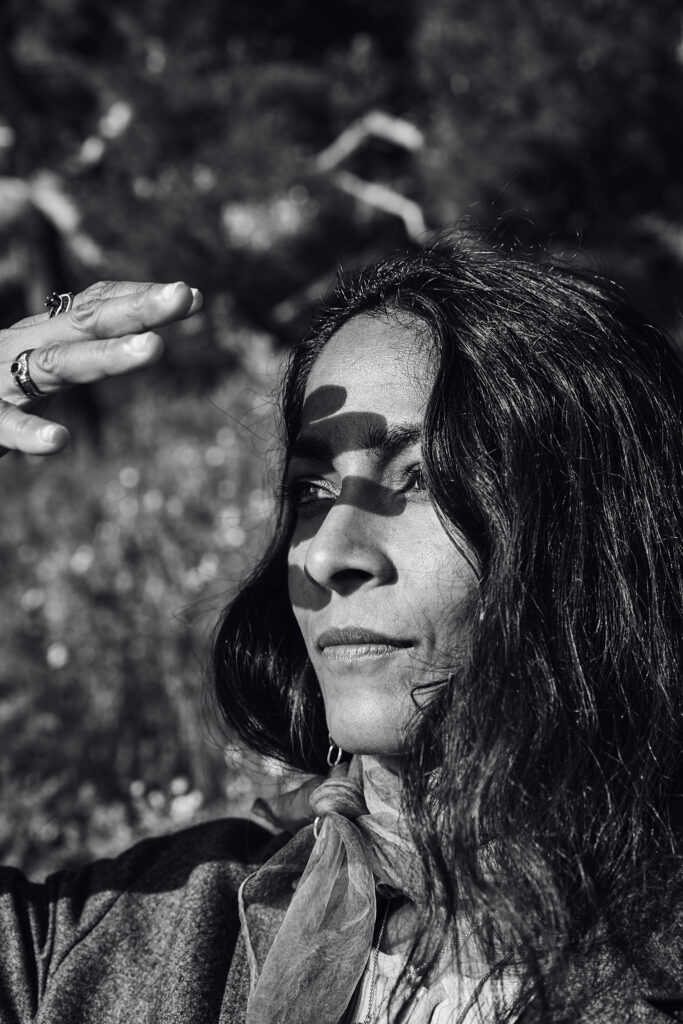
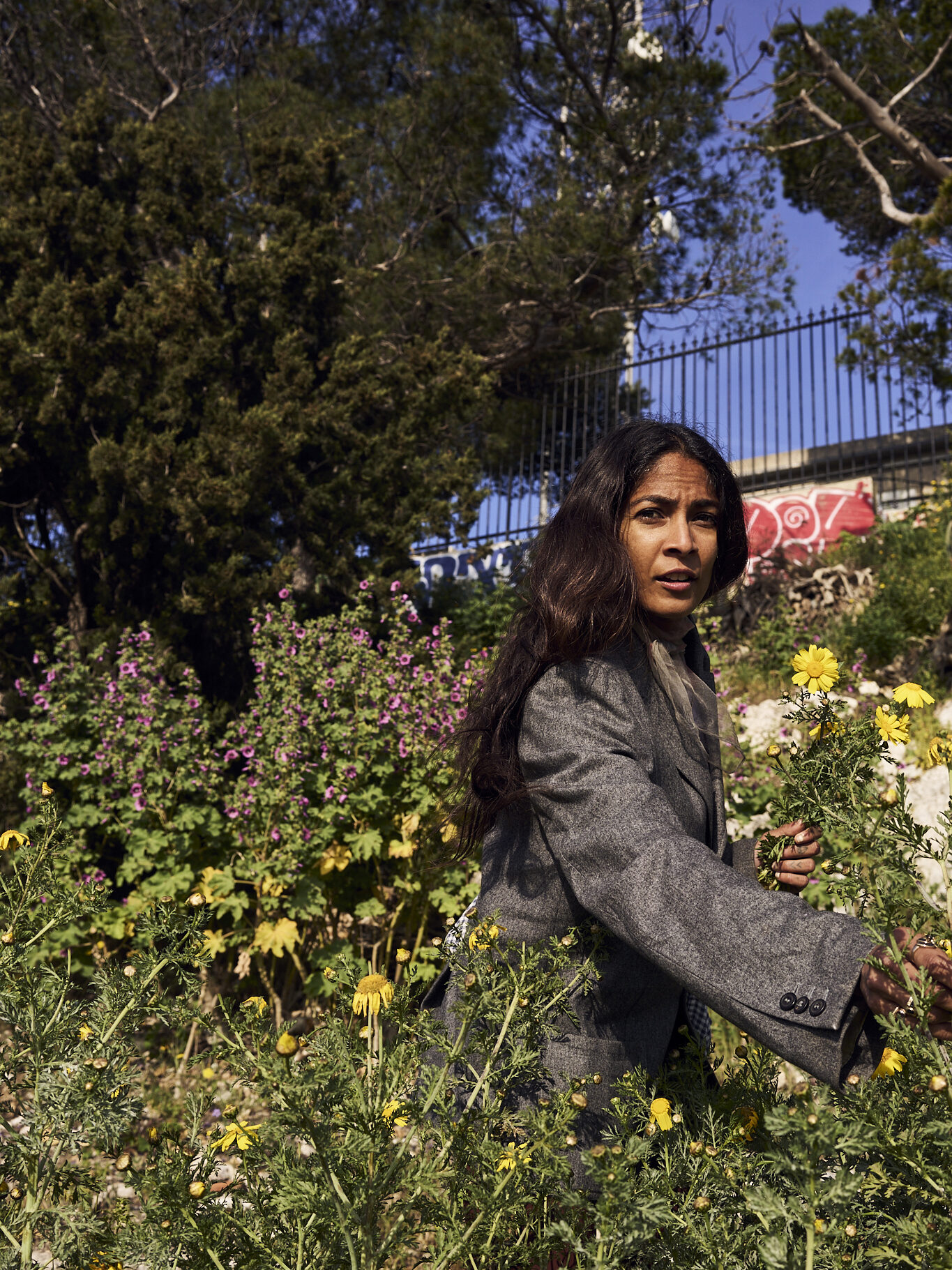
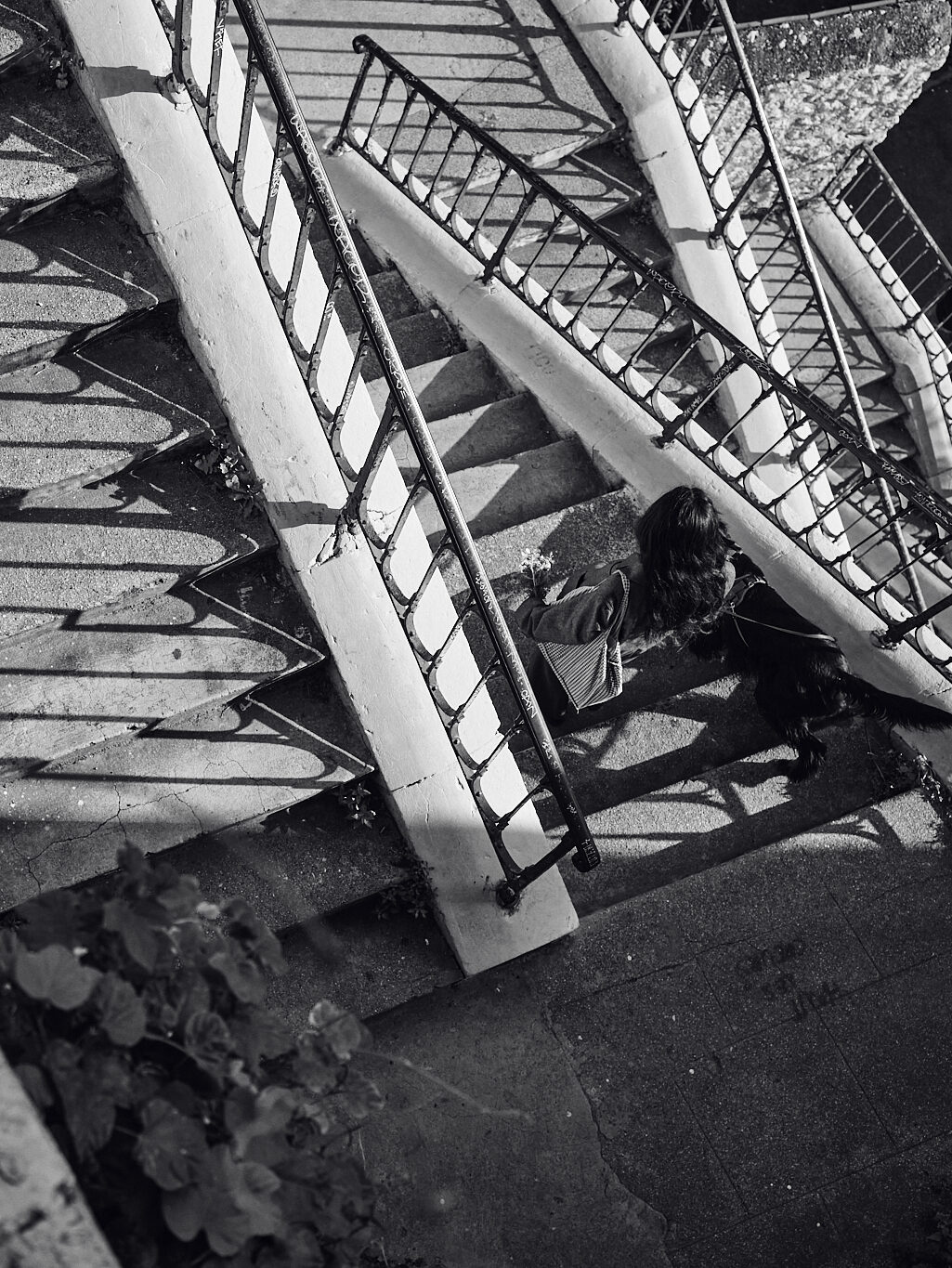
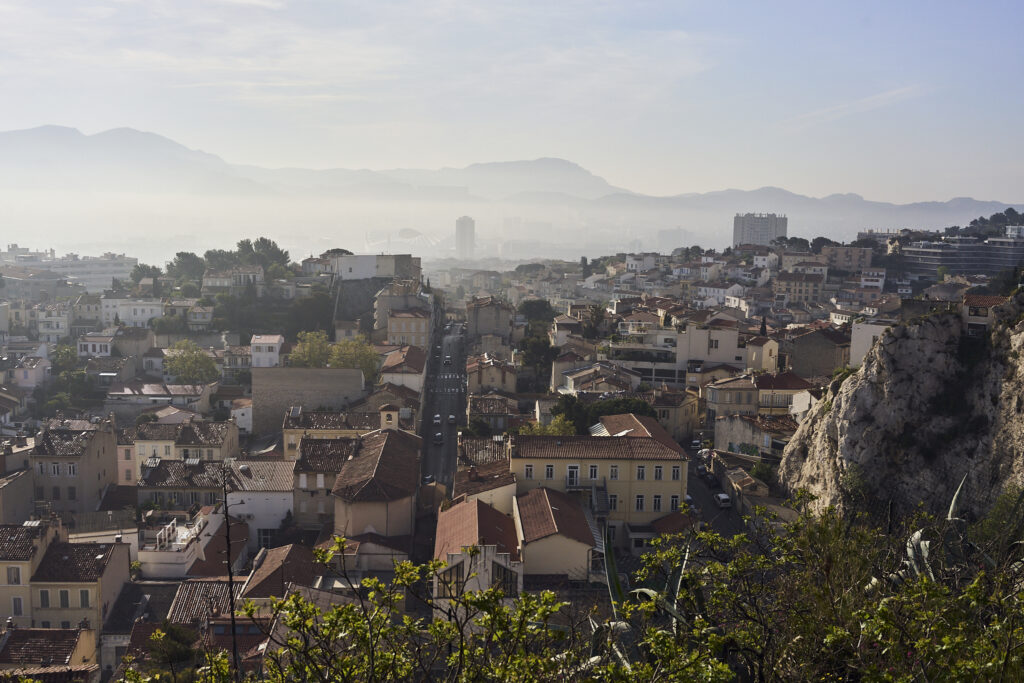
Zuri Camille de Souza arrived in Marseilles by sea with her boyfriend Jimmy Granger. ‘We sailed from Greece to Marseille. We were in Greece for a year, and before that, in India,’ she says. The first thing they saw when they arrived that cold December morning in 2018 was the cathedral on the hill and the golden statue of Mary perched on top. ‘We are not very religious, but this was just quite beautiful.’ Now ‘La Colline de la Bonne Mère’ is her favourite place to walk with her Golden Setter dog Jaano, (Zuri tells me Jaano means ‘my life’ in Urdu – ‘like “my dear,” you see it a lot in Hindi and in old Bollywood movies’). She finds it gives her some space in the day, to clear her head. ‘It was one of the few spaces where Jaano could run free in the middle of the city.’ During the confinement of Covid, Zuri spent a lot of time there. ‘I found that I could forage so much there, and that was really lovely. Now it’s become a space I go to harvest a lot of flowers and herbs and asparagus.’
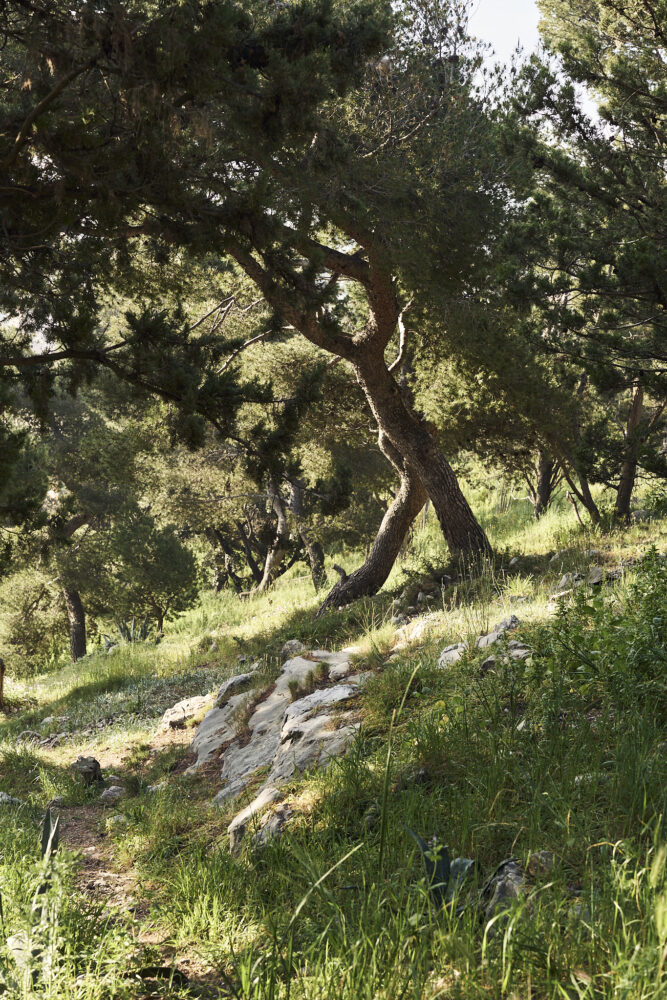
It’s late April when we meet online for a chat, a few weeks after Zuri was photographed on her favourite walk. She is in Cannes, working on a three-week residency doing dinner service at Sens restaurant, fitting in our interview before going back to her work. The Mediterranean sun is shining brightly through her window, but she describes La Colline as though she is there. ‘Right now there’s valerian flowers – the roots of which you use to sleep. So it’s red valerian; chrysanthemum. You can use the flowers, but also the leaves in broths and soups and salads. There is the Judas Tree, it has bright pink flowers. Then once it gets seed pods, it just becomes quite messy because it releases its resin that makes a big patch on the floor. But they’re beautiful, bright pink flowers. There’s wild garlic, there’s wild asparagus, wild garlic and leeks, salsify… yeah, a lot.’
As a chef, Zuri is mindful that she can’t feed everyone with the herbs and flowers she forages. ‘You have to leave most of what’s grown. You have to leave it for nature, and then a little for someone else and a little for yourself,’ she says. ‘It’s just a way of being more sensitive to nature and to think beyond oneself.’ For every action there is an impact on someone or something. You can be an individual whilst also being connected to the world around you. ‘For me, foraging is exactly just to think okay, these strawberries are perfect, but they are also for, I don’t know, the little rabbits and the sparrows and tiny little birds. But also, a little girl going on a walk with her grandmother hours later, you know?’
This idea of taking just enough and not too much from nature reminds me of the words of Robin Wall Kimmerer in her book Brading Sweetgrass, reminding us of our reciprocal relationship with the land. ‘I consider the foraged ingredients kind of like little jewels that I use,’ says Zuri. Sometimes if there is a lot of an ingredient, she makes vinegars or preserves it in a certain way to use as a seasoning throughout the year. She says around 40% of her ingredients are foraged like this. ‘The rest of it is grown mostly by women I know. I try to work with them as much as possible.’
Right now it’s spring and the hills are alive with flavours. ‘There’s a lot of asparagus, there’s a lot of fava, beans, peas, strawberries, all of these very fresh delightful things slowly starting to creep in, courgette flowers, lots of different types of courgettes, round ones, long ones. And fig leaves’ – all there to enrich the plates of food Zuri creates.
Zuri, 34, studied ecology on a tiny island in Maine in the US. For her, education was a way to travel. She was born in Goa, India and grew up between there, Pune and Bangalore, in Southwest India. Her parents were well-travelled – her father was born in Nairobi and came to India when he was 17. Her mother was born in Pune and lived in Trinidad, Hong Kong, Zambia, and Mauritius. Zuri grew up with ‘stories of travel and cultures and food and landscapes.’ At the age of 18, she got a scholarship to study human ecology at the College of the Atlantic, a ‘very tiny, very alternative, very hippie school.’ Through her college work, she travelled to Palestine researching nature, food and ecology. Then she went back to Bombay, studying Graphics in Dubai for a while to earn some money, and then to Istanbul where she did a long research project. ‘I’m very interested in urban spaces and nature, the interaction between nature and architecture. And I was very interested in this idea of palimpsest in Istanbul, palimpsest of architectural layers, and how nature exists within this.’
Back in Bombay, she met her photographer boyfriend Jimmy. ‘We were very interested in nature, but also occupied spaces, access to nature, for example, in Kashmir, which is quite a complicated part of India, or in Palestine, or even in Lesbos, and the entire Mediterranean basin.’ They ended up in Lesbos volunteering on a project with refugees, making zines and writing poetry and using radio as a medium to talk about their situation. ‘It was just about giving people tools to share stories. It could be like a recipe.’ Or, for that matter, working on the community garden. At the end of the project, they sailed back to Marseille.
With little French, Zuri found a job washing dishes in a restaurant and then started to cook. During the pandemic she started her own business, Sanna, making Indian home cooking that she posted on Instagram and delivered by bike. She’s not formally trained and says her food is without frills. ‘The food I cook is just trying to keep it honest,’ she says. ‘I’m trying to cook food that people at home would like to eat, and because it’s easy for me to cook for people who have never eaten the food I grew up eating, and to feel surprised and happy and find it delicious.’ Her biggest critic is, she says, her family. ‘It’s definitely a tool to research where I come from and to understand my relationship to the living world around me, to offer the perspective of my culture.’
In 2020, Zuri wrote a book, Là Où le Riz Sent les Fleurs de Manguier, which means ‘There where the rice smells of mango flowers’ – a reference to very specific rice that grows in a very specific recent region near Pune. ‘It’s just the most lovely smell that I could never find anywhere else,’ she says. ‘The moment I smell it, I know I’m home; it’s the smell of the rice in my grandmother’s house. And it is also the smell of my favourite season. It’s spring. It’s before the monsoon. You know, mangoes are arriving, and it is beautiful.’ The book is both technical, with 50 recipes, and autobiographical, with memories from her childhood and her family.
Her signature dishes include the Bombay bread ladi pav. ‘You find a version of them in Goa, which is called Puri, which is more round and more rustic, I love making those.’ If you happen to turn up for dinner at Zuri’s, you might be served a light curry with coconut milk. ‘I make a fresh curry paste with turmeric, like turmeric root and tamarind and coriander seeds and cumin and often a lot of green chili and garlic and ginger.’
When she’s not working or foraging, a typical day for Zuri will start with a swim followed by tea to warm up. ‘One of the nice things in Marseille is that a lot of the coast is accessible, and I just go with a couple of friends. We try to go as often as possible. In summer, it’s okay, but in winter, it takes me two hours to get back to 37 degrees. But I love it.’ Sometimes Jaano will go too. ‘When I am working, I will do 12-hour work days, because there’s a lot of prep, there’s the service, there’s the clean, there’s a prep for the next day.’ She always tries to do a run or swim or yoga every day and eat a good meal in the morning. ‘It can be something simple, but something healthy and nourishing in the morning.’
In May, Zuri is doing a project at a friend’s cocktail bar, Apoteke, working with Jimmy. ‘We’re looking at all the things we enjoyed eating for breakfast when we used to go to the market in Bombay, because in Bombay, food is everywhere. It’s just part of the urban landscape, and it’s so normal to just fit your day around what you want to eat, at what time and where.’ She’s also part of a community project with another collective, working on a barbecue. ‘We’re doing the bread and the vegetables. They’re doing the sauces. Everyone’s going to be camping. And then they wake up very early to go hike and see the sunrise.’ While she says she gets homesick for India, she also finding her place in Marseille. ‘I’m still digesting the city,’ she says. ‘I’m still understanding it.’
‘It was just about giving people tools to share stories. It could be like a recipe.’