Dream bags and superior booze
Charlie Borrow, leather maker by day and bartender by night, on the idea behind his multi-faceted Bethnal Green space.
Words Beatrice Ross
Photographs Beatrice Ross
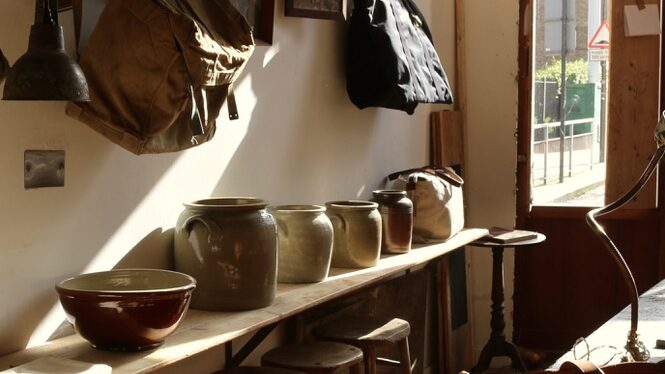
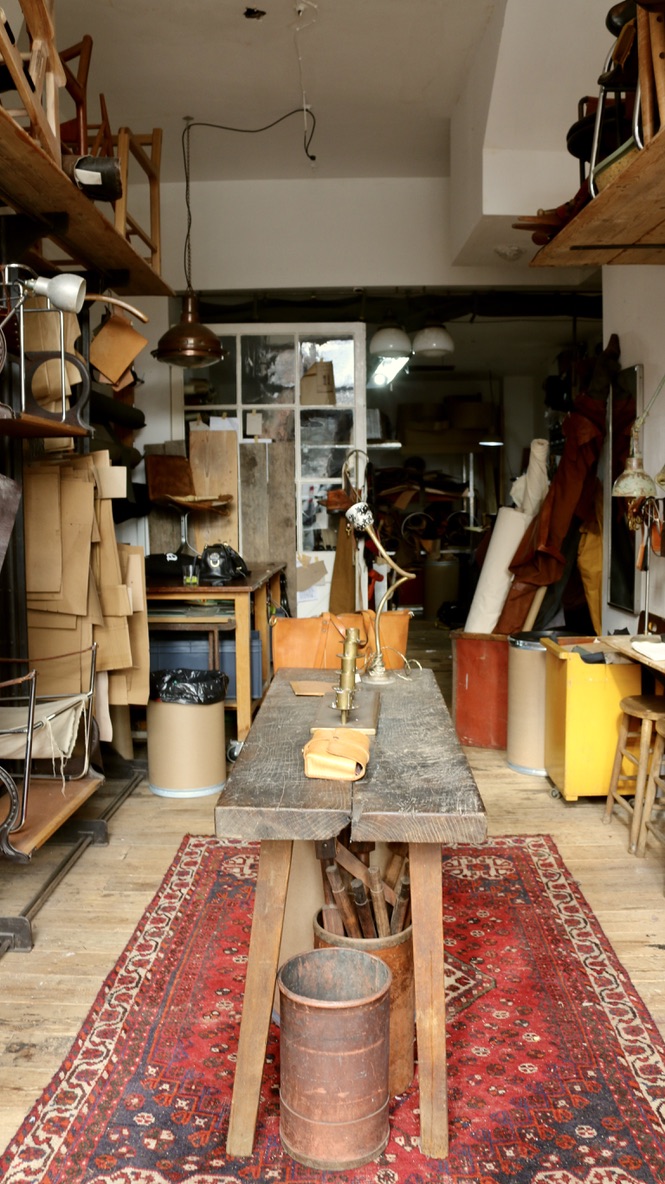
‘It was never the concept to come through the leather shop and downstairs into the bar,’ says Charlie Borrow, propped against a workbench in his East London workshop. ‘It just happened that way, it was never about being a concept-heavy space.’
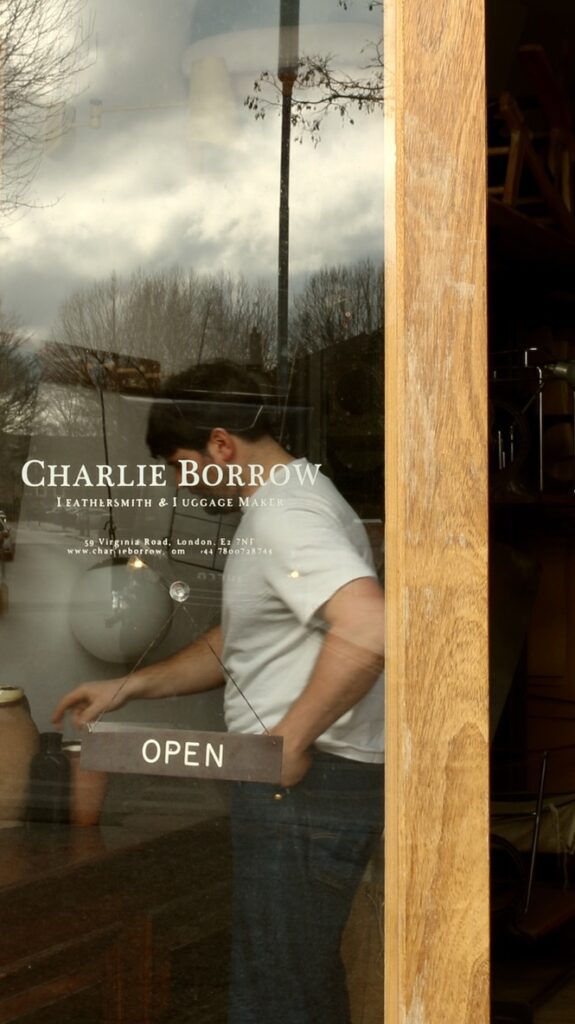
Tucked away in the heart of Shoreditch between Columbia Road and Boundary Estate, the bar is hidden in plain sight, the facade of the leather shop striking in its simplicity by day and warmly aglow by night. ‘I got the keys on the second of March and Covid came on the 20th,’ Borrow explains. ‘It was both a blessing and a curse because I had no idea how much work it needed, but it had good bones.’ He took over the former newsagents with the intention of it becoming a workshop and retail space during the week – the possibilities for more came with the discovery of an alcohol license plastered to the wall. ‘I called up the council and asked what I could do with it.’
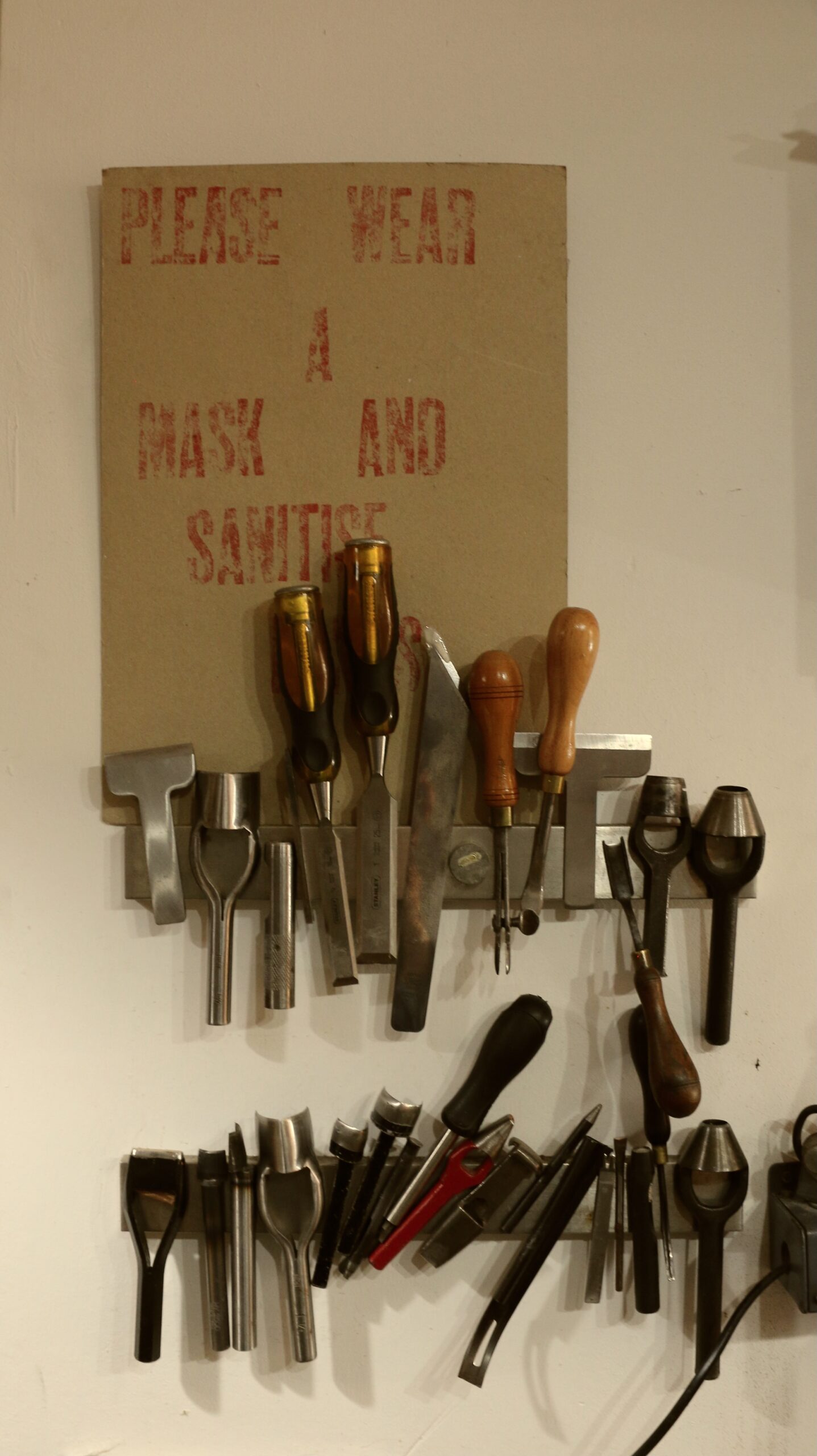
Borrow’s passion for leathercraft emerged through trial and error during an attempt to replicate an oversized leather bag that his mum coveted. ‘I’ve still got it, and I’m embarrassed by it,’ he laughs. ‘She’d seen it on Pinterest. I picked up some leather out of a bargain bin at one of those jacket shops, put two squares of leather together and added two handles. It’s absolute rubbish!’. Borrow had begun to study tailoring, but as demand increased for more casual styles of menswear, he had a change of heart, and put his industrial sewing machine to use making leather goods for friends before being picked up by a wholesale agent in Japan. This relationship suffered under the impact of Covid, but created an opportunity for him to focus on developing the quality of his products over quantity.
‘I’m very analogue,’ he says. ‘I also hate calling myself a designer, I’ve always thought of myself as a maker.’ Prioritising materials and hardware with the ‘Made in Britain’ stamp, Borrow often seeks inspiration by trawling through antiques markets and browsing second hand military gear. ‘I can find myself at 1am, looking at boat or cargo manufacturers and go, “Ah! That’s exactly what I’m looking for”.’ The durability of these ‘utilitarian’ goods are a motivation for him to keep making with longevity at the forefront. ‘I’m always trying to dig deeper into production, but some suppliers stop you digging too deep. People don’t really make things like clips in the UK any more, and we’ve lost those skills in some places. You have to pick your battles and you can’t fight it too much.’
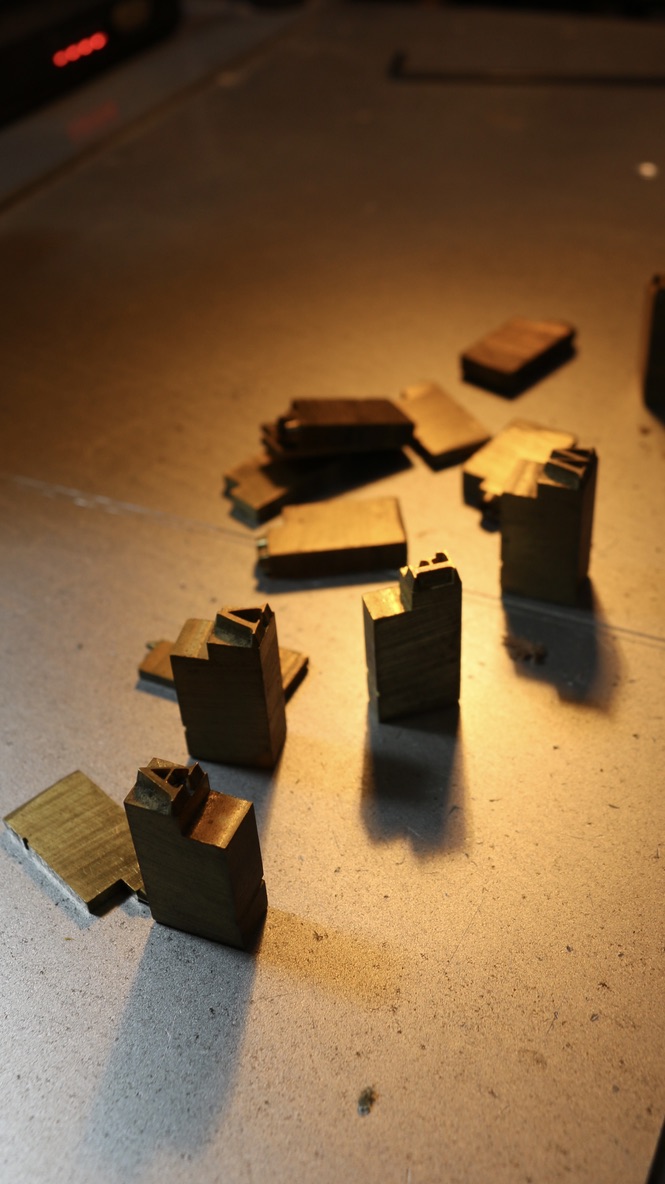
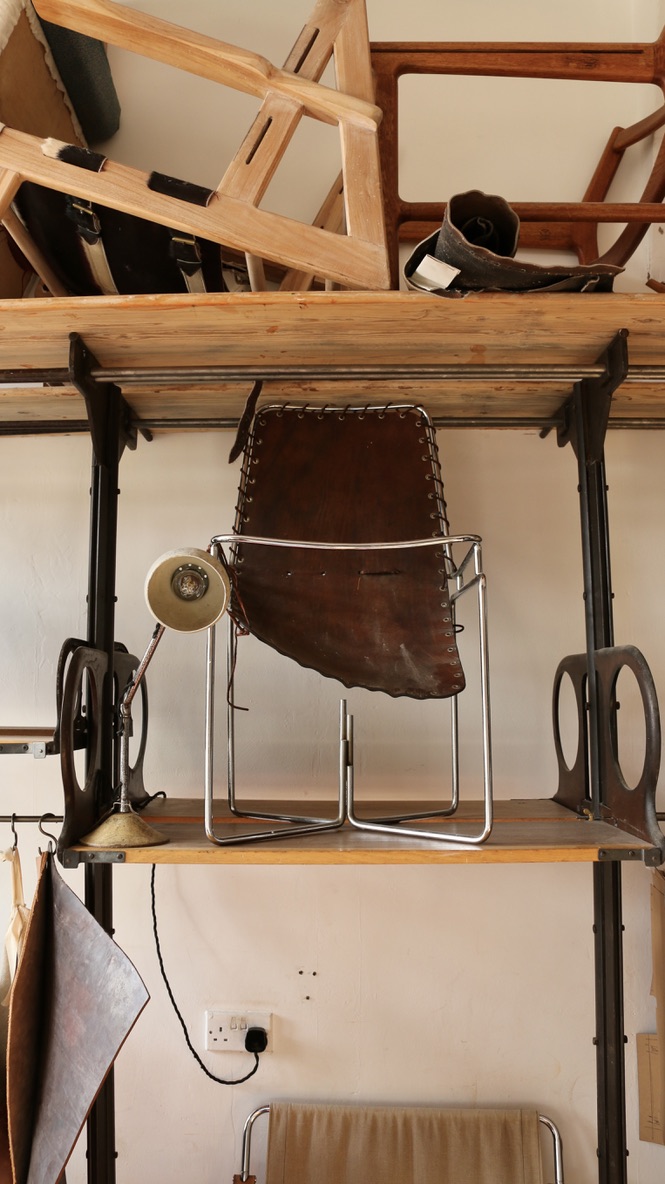
He sources the leather for bags and upholstery from a tannery in Devon, uses canvas produced in the UK, and the fabrics are finished and dyed in Scotland. All of Borrow’s products are hand-stitched and finished. ‘Buying off the shelf is so impersonal, it’s those little details like a zip pocket or a monogram that go a long way. The designs might be simple and not look like much has gone into them, but half the beauty is in the details,’ he says. ‘I try to keep everything made from one piece of leather as it makes it stronger. I keep it as simple as possible, and hate seeing a bag with handles that are too long, when it’s thrown out of balance.’
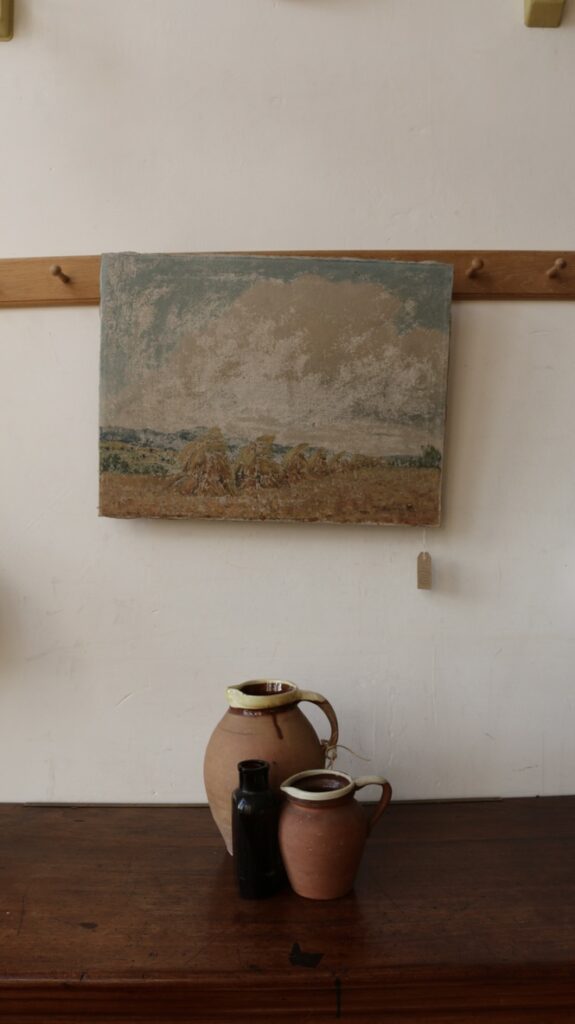
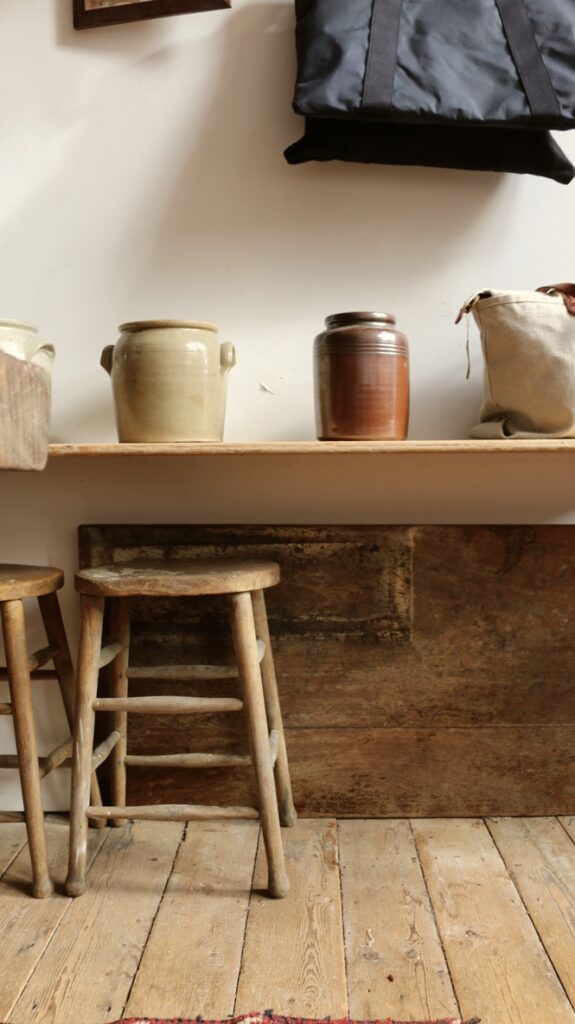
Borrow keeps the spirit of the bar under the shop close to home too. The wine list is concise and to the point, comprising of wines by St John, for whom Borrow designed and made the leather seating at their Marylebone Bread & Wine branch. The cocktails on offer pair nicely with the abundance of salted, crinkle-cut crisps which he tops up with reckless abandon, leaving no bowl empty. The space is romantic and genuine, the decor liminal, with wooden panelling from a church repurposed around the perimeter of the room. Candlelight (‘the best light’) makes conversations more intimate and the bar warmer, with all other lighting deemed ‘too bloody bright’. It’s no surprise that customers return with ritualistic enthusiasm each Thursday evening to this bar beneath the workshop, seeking the buzz and hum of chatter, paired with a seriously good cocktail. ‘I love being part of a community; you meet locals and see their faces come back. Some come three weeks out of the month, some once a quarter or once a year. Some bring work mates, some regret bringing work mates. Their secret has been found out.’
‘The designs might be simple and not look like much has gone into them, but half the beauty is in the details,’
Borrow is no stranger to the bar and restaurant scene, having designed and made furniture for Gails, BRAT, Smokestack and Smoking Goat. ‘It expands your mind, design wise,’ he says of working with restaurant owners and interior designers. ‘Sometimes I think I would never have thought to have done that, or perhaps a vision doesn’t 100% align with what’s possible. When I was starting out, maybe I hadn’t charged enough, but I can always leave a project having learnt a skill.’ The furniture fixation developed when he went through a phase of buying chair frames that ‘needed love’, fettling them up in any rare spare moment, only for them to sell instantly from the shop window. The combination of ‘funny little jobs’ which Borrow has enthusiastically taken on has lead to his professional world ‘becoming smaller’, as faces and contacts gradually became familiar, the bar a place to embrace social interaction and develop relationships both professional and personal.
‘I prefer being busy and it’s nice to have both businesses, but working on my own can be quite antisocial except for clients coming in, whereas downstairs on a Thursday at 6.30pm groups of people come in at once’. He welcomes people from creative industries ‘who miss pulling pints’ to lend a hand at the bar, all of whom contribute a mutual energy and enthusiasm to the space. ‘It’s a nice balance and there’s less pressure on both businesses, but as long as the bag business continues, that’s the main thing.’